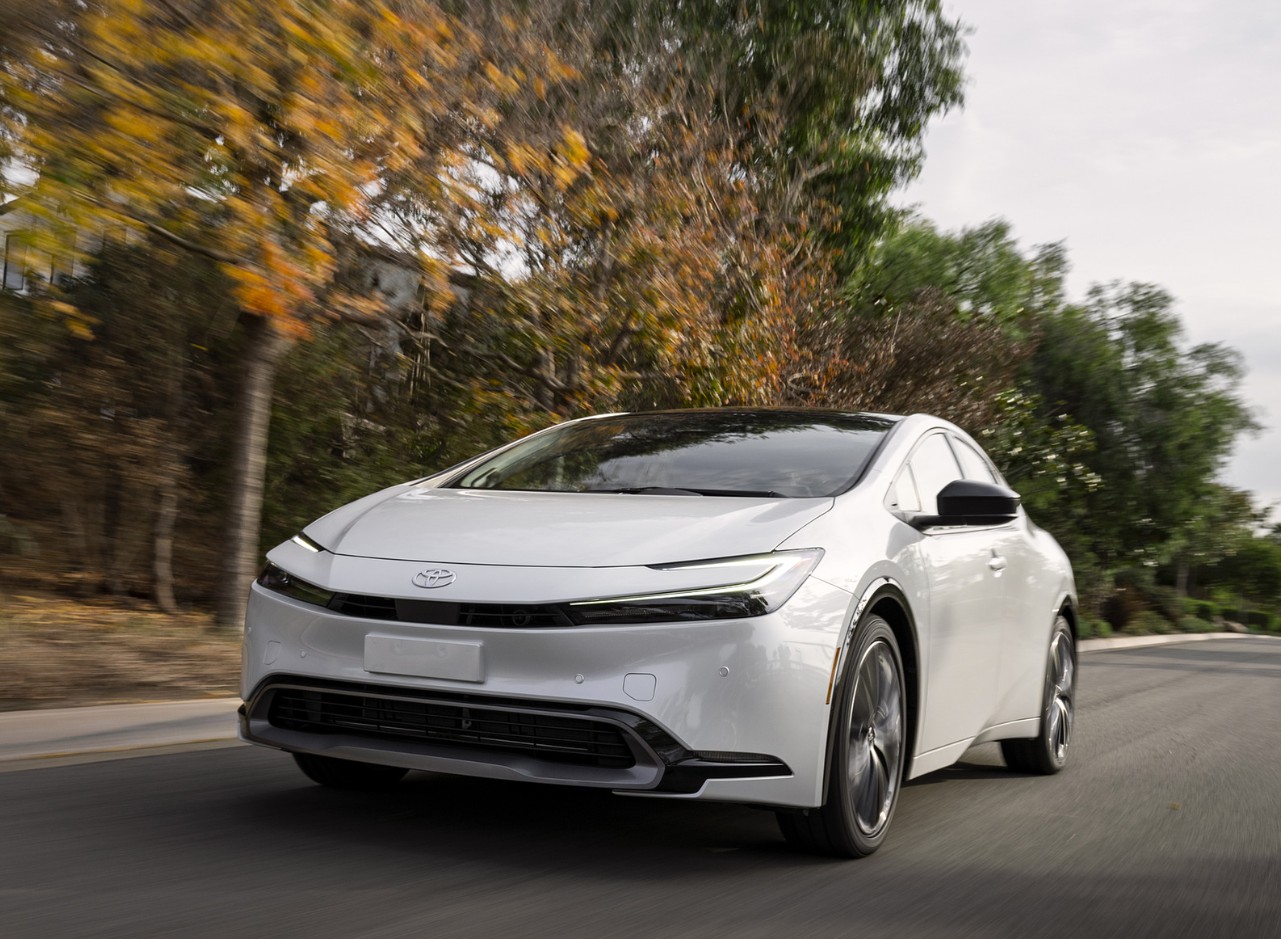
2028 Toyota Prius Review, Price, Configurations – The 2028 Toyota Prius could continue the evolution of one of the world’s most recognised hybrid cars, combining distinctive styling, impressive fuel economy, and everyday practicality in a package designed for drivers who want to spend less time at the fuel pump. The latest Prius has already moved far beyond its original economy-focused image, introducing a lower, more athletic profile, stronger hybrid performance, and a more technology-focused cabin. For 2028, the most realistic expectation is further refinement of this successful formula rather than an entirely new generation. Toyota has not yet announced the 2028 Prius, so future specifications, equipment changes, pricing, and launch timing remain projections.
The current 2027 U.S.-market Prius provides a useful reference point. It uses Toyota’s fifth-generation hybrid system with a 2.0-litre four-cylinder engine, producing 194 net combined horsepower in front-wheel-drive form and 196 horsepower with electronic on-demand all-wheel drive. Toyota estimates up to 55 mpg combined for the LE front-wheel-drive grade. Its available equipment includes Toyota Safety Sense 3.0, wireless smartphone integration, and a 12.3-inch multimedia touchscreen on selected grades. These confirmed 2027 details help establish a credible starting point for considering what the 2028 model might offer. 2028 Toyota Prius Review
2028 Toyota Prius Redesign and Update Plan
Exterior & Interior
The 2028 Toyota Prius is expected to build on the fifth-generation design introduced for the 2023 model year. That redesign gave the Prius a much more dramatic appearance, replacing the taller, more conservative shape of earlier generations with a low roofline, a wide stance, and flowing bodywork. For 2028, Toyota could preserve these recognisable proportions while introducing subtle styling improvements to keep the car competitive. Revised front and rear lighting, updated bumper details, fresh alloy-wheel designs, and additional exterior colours would be realistic changes for a model that may receive a mid-cycle refresh rather than a completely new platform. No official 2028 exterior redesign has been confirmed.
At the front, the Prius already has a distinctive appearance built around slim LED headlights, a smooth bonnet, and a clean bumper design. A future update could make the front fascia look even sharper through revised lighting signatures, more carefully integrated air openings, and subtle changes to the lower grille. Toyota could also refine the aerodynamic details around the front corners to manage airflow more effectively. The objective would be to preserve the car’s modern identity while making the design look fresh enough for another model year. A redesigned front bumper might also improve the visual balance between the headlights and lower bodywork without introducing unnecessary styling complexity.
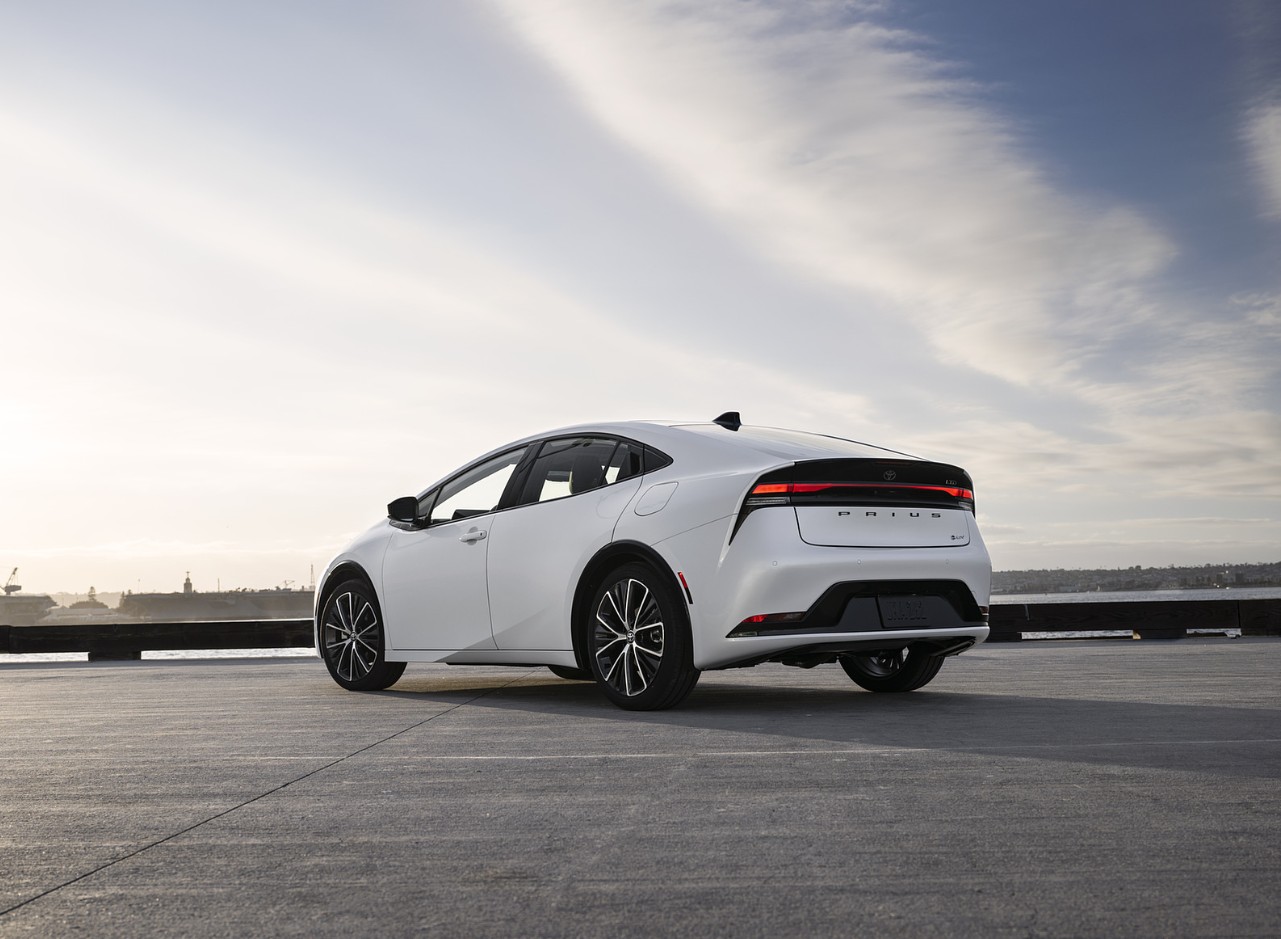
The side profile is likely to remain one of the Prius’s strongest design features. Its sloping roof, sculpted doors, rising beltline, and tapered rear section give it a sporty silhouette that distinguishes it from conventional compact hybrid sedans. Toyota could introduce new wheel patterns, revised exterior trim, and additional paint choices for the 2028 model. The available 19-inch alloy wheels on higher 2027 grades already give the Prius a more assertive stance, while the Nightshade version adds black-finished wheels and darker exterior accents. A future Nightshade package could continue this visual theme with updated black details, although its precise appearance would depend on Toyota’s eventual specification.
At the rear, the Prius’s full-width lighting treatment and sharply sculpted hatch create a recognisable finish. A 2028 update could revise the LED taillight graphics, adjust the rear bumper, and introduce small aerodynamic refinements around the hatch and roof spoiler. The liftback design is especially important because it gives the Prius a useful combination of sleek styling and practical cargo access. Toyota is unlikely to abandon that basic layout if the current generation continues, since it contributes to the car’s everyday versatility. The 2027 LE provides 23.8 cubic feet of cargo capacity with the rear seats raised, giving owners useful space for shopping, luggage, and daily equipment.
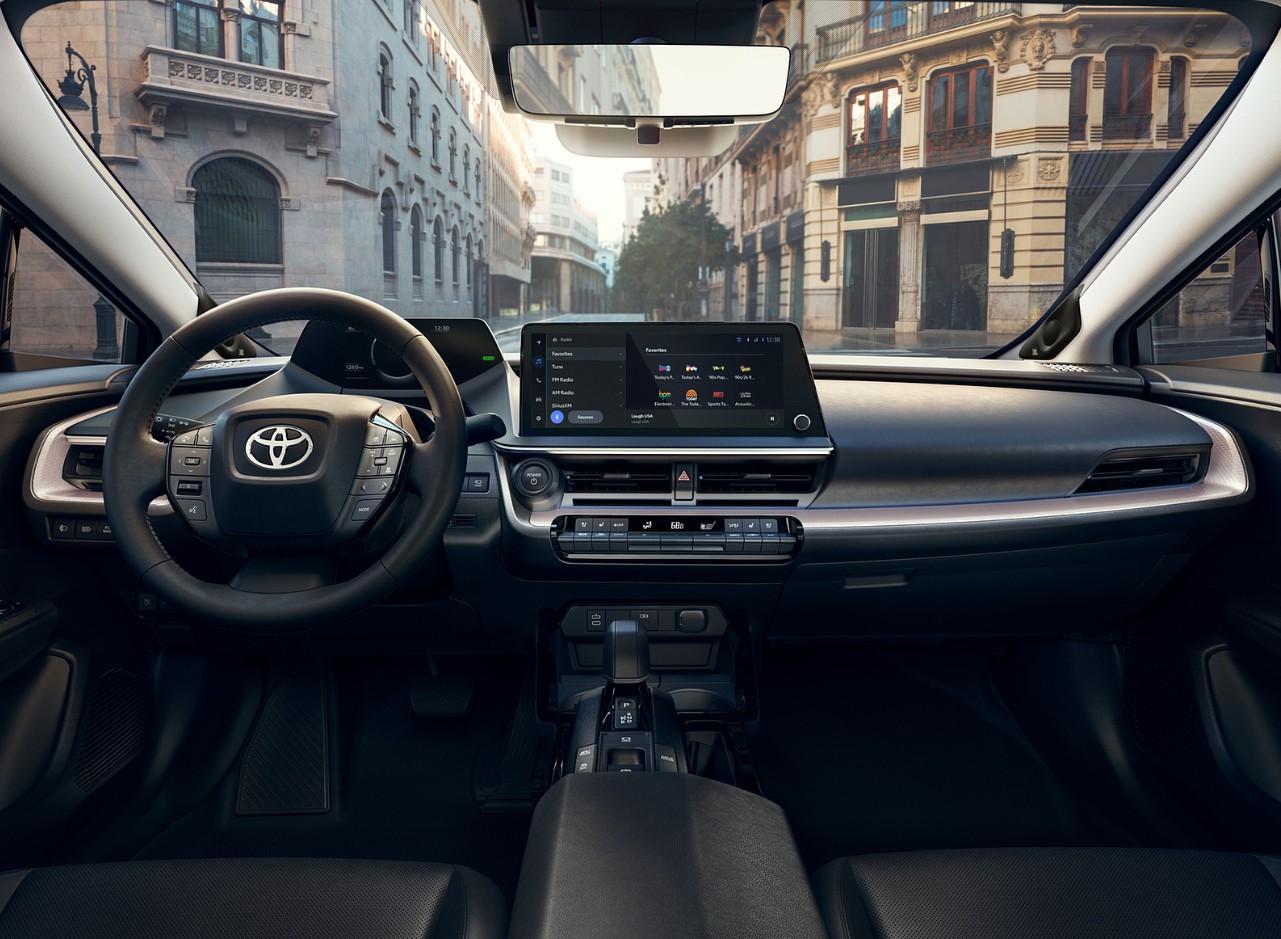
The cabin of the 2028 Toyota Prius could receive carefully selected improvements in materials, convenience, and digital technology. The current generation already has a more driver-focused layout than earlier Prius models, with a modern dashboard, a top-mounted digital instrument display, and a central multimedia screen. Toyota could build on this arrangement by improving the quality of frequently touched surfaces, revising interior colour combinations, and adding more refined trim details. The overall objective should be to make the Prius feel comfortable and well equipped without turning it into an unnecessarily expensive luxury car. Practical storage, clear controls, and a good driving position should remain central to the interior design.
The infotainment system would be another important part of the 2028 update. The 2027 Prius offers an 8-inch Toyota Audio Multimedia display on the LE grade, while a 12.3-inch touchscreen is available on higher versions. Wireless Apple CarPlay and Android Auto compatibility help drivers access navigation, music, calls, and messaging through familiar smartphone interfaces. Toyota could improve the system’s processing speed, menu organisation, voice recognition, and connected services for 2028. A larger screen might become more widely available, but that change has not been confirmed. Keeping essential climate and audio functions easy to operate would also help make the cabin more convenient during everyday driving.
Passenger comfort should remain a priority, particularly because the Prius’s low roofline creates a sportier shape than many traditional hybrid hatchbacks. The front seats could receive revised cushioning and improved adjustment, while higher grades may continue to offer SofTex-trimmed upholstery and power adjustment for the driver. The 2027 XLE already includes an eight-way power-adjustable driver’s seat and heated front seats, providing a useful foundation for a well-equipped 2028 version. Toyota could also improve cabin insulation to reduce tyre, wind, and road noise at motorway speeds. Rear passengers would benefit from comfortable seat contours, practical door storage, and accessible charging connections, although the sloping roof may remain a consideration for taller occupants.
Convenience equipment could expand through additional USB-C connections, wireless phone charging, improved connected services, and more advanced parking assistance. The current Prius offers six USB-C ports, Qi-compatible wireless charging on selected grades, and available Advanced Park to assist with certain parking manoeuvres. A panoramic view monitor is also available, using cameras to display the vehicle’s surroundings on the multimedia screen. Toyota could refine these systems for the 2028 model with clearer graphics and more responsive operation. An available fixed glass roof could continue to bring additional light into the cabin, while practical features such as 60/40 split-folding rear seats would preserve the flexibility expected from a compact liftback. 2028 Toyota Prius Review
2028 Toyota Prius Specs
Engine & Performance
The 2028 Toyota Prius is expected to continue using a highly efficient hybrid powertrain, although Toyota has not announced its future engine or motor specifications. The latest U.S.-market model uses the fifth-generation Toyota Hybrid System, pairing a 2.0-litre four-cylinder DOHC gasoline engine with electric motor-generators and a lithium-ion battery. The system is designed to manage gasoline and electric power automatically, allowing the car to operate efficiently in different driving conditions. A similar configuration would make sense for 2028 because it already delivers a useful combination of performance, smooth operation, and strong fuel economy. Any changes to engine output, battery chemistry, or control software remain unconfirmed.
The current 2027 Prius produces 194 net combined horsepower with front-wheel drive and 196 horsepower with electronic on-demand all-wheel drive. Toyota estimates acceleration from zero to 60 mph in approximately 7.2 seconds for front-wheel-drive models and 7.0 seconds for AWD versions. These figures give the Prius a noticeably more responsive character than older generations that prioritised economy above almost everything else. For 2028, Toyota could refine throttle response and hybrid-system calibration to make acceleration feel smoother and more predictable. The electric motors can provide immediate assistance when pulling away, while the gasoline engine contributes additional power when stronger acceleration or sustained speed is required.
The Prius’s hybrid system is designed to operate without requiring drivers to plug the vehicle into an external charger. During normal operation, the gasoline engine and electric motors work together, while regenerative braking captures some of the energy normally lost during deceleration. That recovered energy is stored in the hybrid battery and can later support electric motor operation. At low speeds and under suitable conditions, the vehicle can travel using electric power for short distances. Toyota also provides selectable driving modes, including EV, ECO, Normal, and Power, allowing drivers to adjust the vehicle’s response and energy-use priorities. A 2028 version could improve the transition between operating modes through updated software, although no such changes have been announced.
2028 Toyota Prius Fuel Economy
Fuel economy remains the Prius’s defining advantage, and the 2027 model provides a strong reference for what buyers may expect from a future version. Toyota lists an EPA-estimated 55 mpg combined rating for the front-wheel-drive LE grade, with a 53 mpg combined estimate for the LE AWD version. The LE’s published city and highway estimates are 59 and 50 mpg respectively, while larger-wheel grades have lower ratings. If the 2028 Prius retains similar mechanical hardware and vehicle weight, comparable efficiency would be a reasonable expectation. However, official 2028 EPA figures will depend on the final vehicle specification and certification testing. Driving speed, traffic, temperature, tyre pressure, air-conditioning use, and driving habits can all affect real-world consumption. 2028 Toyota Prius Review
2028 Toyota Prius Safety Features
Safety technology should remain a major part of the 2028 Toyota Prius package. The 2027 model comes with Toyota Safety Sense 3.0, a collection of driver-assistance technologies designed to help drivers recognise potential hazards and respond more effectively. Its features include a Pre-Collision System with Pedestrian Detection, Full-Speed Range Dynamic Radar Cruise Control, Lane Departure Alert with Steering Assist, Lane Tracing Assist, Road Sign Assist, Automatic High Beams, and Proactive Driving Assist. These systems support the driver rather than replace the need for attention and responsible control. Toyota could refine sensor performance and software calibration for 2028, but no upgraded safety package has been announced.
Additional convenience and safety systems could make the Prius easier to operate in busy traffic and crowded parking areas. The current model offers Blind Spot Monitor with Rear Cross-Traffic Alert, helping drivers identify vehicles approaching from adjacent lanes or behind the car when reversing. Safe Exit Alert can provide warnings if the system detects approaching traffic that could create a hazard when a passenger opens a door. Available Panoramic View Monitor and Advanced Park can also assist with low-speed manoeuvres. A 2028 version could continue offering these technologies, potentially with updated displays or improved detection capability. Their availability would likely depend on trim level, optional packages, and the market in which the vehicle is sold.
The expected trim range could continue to follow the four-grade structure used for the 2027 U.S.-market Prius: LE, XLE, Nightshade, and Limited. The LE would likely remain the value-focused entry point, concentrating on essential equipment, efficient wheels and tyres, Toyota Safety Sense 3.0, smartphone connectivity, and a practical interior. The XLE could appeal to buyers who want more comfort, with larger alloy wheels, SofTex-trimmed seating, a power-adjustable driver’s seat, heated front seats, and wireless phone charging. These grades already provide a clear separation between affordability and additional convenience. Toyota has not confirmed whether the same names or equipment combinations will carry over to 2028.
The Nightshade and Limited grades could occupy the more distinctive and premium positions in the range. Nightshade adds darker exterior styling, including black-finished 19-inch alloy wheels and black trim details, giving the Prius a more dramatic appearance. Limited focuses more heavily on equipment and comfort, with features such as a fixed glass roof, a 12.3-inch multimedia touchscreen, and an available premium JBL audio system. Toyota could introduce revised interior finishes, exclusive colours, or new wheel designs for these grades in 2028. Front-wheel drive and electronic on-demand AWD may also remain available across selected configurations. The final grade structure, standard features, and drivetrain combinations will need to be confirmed by Toyota before they can be treated as official.
2028 Toyota Prius Release Date & Price
The 2028 Toyota Prius will need competitive pricing to maintain its position as an attractive hybrid option. The 2027 U.S.-market model provides a useful starting point, with a published base MSRP of $28,755 for the LE grade before applicable dealer processing and handling charges. The XLE starts at $32,200, Nightshade at $33,005, and Limited at $35,770. All-wheel-drive versions carry higher starting prices, with the 2027 LE AWD listed at $30,155 and the Limited AWD at $37,170. These are confirmed 2027 U.S. prices, not official 2028 pricing. Toyota could adjust the next model year’s prices to reflect equipment changes, manufacturing costs, inflation, and market conditions.
For 2028, a modest price increase would be possible if Toyota adds equipment or makes meaningful improvements to the hybrid system and interior technology. The entry-level LE would likely remain the most affordable route into Prius ownership, while the XLE and Nightshade could appeal to buyers who want additional comfort or distinctive styling. The Limited would probably remain the most expensive grade because of its larger multimedia display, premium audio availability, glass roof, and other convenience features. However, there is no confirmed 2028 MSRP, destination charge, optional-package price, or final grade pricing. Buyers should also remember that U.S. prices cannot be directly applied to other markets because taxes, import duties, currency exchange rates, and local equipment specifications can change the final retail cost considerably.
Toyota has not announced an official 2028 Prius release date. The 2027 model was announced on July 16, 2026, with Toyota stating that it was expected to arrive at U.S. dealerships during that summer. That announcement provides historical context, but it does not establish a confirmed schedule for the following model year. If Toyota follows a conventional annual product cycle, more information about the 2028 Prius could emerge during 2027, with market arrivals depending on production and regional distribution plans. This is only a reasonable industry-based expectation, not a confirmed launch window. No official order-opening date, production start, or dealership delivery schedule has been published for the 2028 model.
Market availability will also depend on Toyota’s regional product strategy. The Prius is sold in several international markets, but equipment, powertrain choices, trim names, and prices can differ significantly between countries. The U.S. specifications discussed in this article should therefore be treated as a reference rather than a universal specification. Indonesian buyers, in particular, should wait for information from Toyota Astra Motor before assuming that a particular 2028 grade or configuration will be officially offered locally. Import costs, taxation, hybrid incentives, and local demand can all influence whether a model is introduced and how it is priced. Until Toyota confirms its plans, the 2028 Prius should be regarded as an anticipated future model rather than a vehicle with an established Indonesian launch date.
Conclusion
The 2028 Toyota Prius has the potential to continue the transformation that made the latest generation more attractive to a wider range of drivers. Its combination of sleek liftback styling, a responsive 2.0-litre hybrid system, impressive fuel economy, useful cargo space, and modern safety technology gives Toyota a strong foundation to build upon. A 2028 update could focus on improved cabin materials, refreshed exterior details, smarter infotainment, and further refinement of the hybrid driving experience rather than a complete redesign. The 2027 Prius already demonstrates how effectively Toyota can combine efficiency with everyday performance. However, the 2028 model’s final specifications, fuel-economy ratings, trim levels, prices, and release date remain unconfirmed. Until Toyota publishes official details, the most realistic expectation is a carefully refined continuation of the current Prius formula.
Note: This blog post’s material is primarily sourced from resources that were available previous to the product’s release. For the most up-to-date information, contact your local dealership or consult official sources.
Frequently Asked Questions
2028 Toyota Prius Review, Price, Configurations - The 2028 Toyota Prius could continue the evolution of one of the world's most recognised hybrid cars, combining distinctive styling, impressive fuel economy, and everyday practicality in a package designed for drivers who want to spend less time at the fuel…
The current 2027 U.S.-market Prius provides a useful reference point. It uses Toyota's fifth-generation hybrid system with a 2.0-litre four-cylinder engine, producing 194 net combined horsepower in front-wheel-drive form and 196 horsepower with electronic on-demand all-wheel drive. Toyota estimates up to 55 mpg combined for the LE front-wheel-drive…
2028 Toyota Prius Redesign and Update Plan Exterior & Interior The 2028 Toyota Prius is expected to build on the fifth-generation design introduced for the 2023 model year. That redesign gave the Prius a much more dramatic appearance, replacing the taller, more conservative shape of earlier generations with…
At the front, the Prius already has a distinctive appearance built around slim LED headlights, a smooth bonnet, and a clean bumper design. A future update could make the front fascia look even sharper through revised lighting signatures, more carefully integrated air openings, and subtle changes to the…
The side profile is likely to remain one of the Prius's strongest design features. Its sloping roof, sculpted doors, rising beltline, and tapered rear section give it a sporty silhouette that distinguishes it from conventional compact hybrid sedans. Toyota could introduce new wheel patterns, revised exterior trim, and…