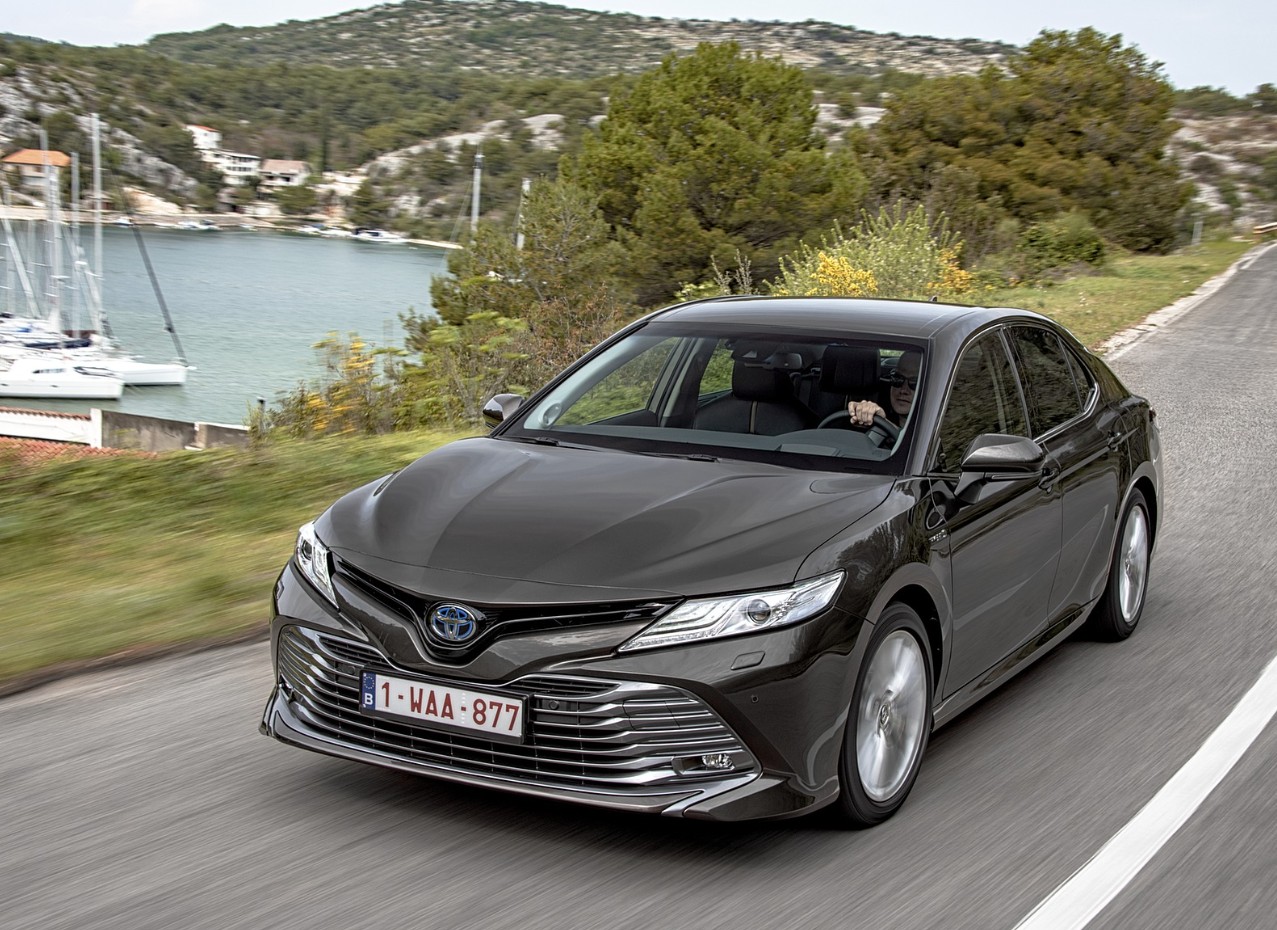
2028 Toyota Camry Hybrid Review, Specs, Interior – The 2028 Toyota Camry Hybrid is expected to continue the evolution of one of the world’s most recognizable hybrid sedans, combining everyday comfort, impressive fuel efficiency, and increasingly sophisticated technology. Toyota has already made hybrid power the standard across the U.S. Camry lineup, giving the current generation a clear identity built around electrified performance rather than traditional gasoline-only engines. For 2028, the most reasonable expectation is further refinement of this successful formula, potentially including updated styling, improved multimedia technology, enhanced driver assistance, and more efficient hybrid-system calibration. Toyota has not officially announced the 2028 Camry Hybrid, however, so its final specifications, pricing, trim levels, and release date remain unconfirmed. The current 2027 model provides the strongest factual starting point for evaluating what the next version could deliver. 2028 Toyota Camry Hybrid Review
2028 Toyota Camry Hybrid Redesign and Update Plan
Exterior & Interior
The 2028 Toyota Camry Hybrid is likely to build on the ninth-generation design introduced for the 2025 model year. Rather than expecting an entirely new platform after only a few years, buyers should anticipate the possibility of a mid-cycle refresh or a carefully updated carryover model. Toyota could use the opportunity to revise selected exterior details, introduce new paint choices, update wheel designs, and refine the lighting signatures. These changes would help the sedan maintain a contemporary appearance without losing the proportions and visual identity that distinguish the current generation. No official 2028 redesign has been announced, so a major body transformation should not be treated as confirmed.
At the front, the current Camry uses a low, wide stance and a distinctive hammerhead-inspired design that gives it a more athletic character than previous generations. Slim LED lighting elements, a sculpted hood, and a broad lower grille create a modern appearance while supporting the car’s aerodynamic profile. A 2028 update could bring revised headlamp graphics, new daytime running-light details, and subtle changes to the front bumper. Toyota may also adjust the grille texture to create a clearer distinction between the comfort-oriented LE and XLE grades and the sportier SE, Nightshade, and XSE versions. Such refinements would be relatively straightforward ways to freshen the sedan while retaining its recognizable front-end identity.
The side profile is another area where Toyota could introduce small but noticeable changes. The current Camry combines a long hood, flowing roofline, defined shoulder surfaces, and a relatively wide stance to create a balanced sedan silhouette. For 2028, new alloy-wheel designs could provide the most visible difference, particularly on the higher grades. Dark-finished wheels and exterior accents may continue to distinguish Nightshade, while XSE could retain a more aggressive combination of sport-oriented details. Toyota could also introduce additional exterior colors or revise existing paint options to keep the range visually fresh. There is no verified information indicating that the 2028 model will receive a longer wheelbase, wider body, or significantly different overall dimensions.
At the rear, a revised bumper, updated LED taillight graphics, and more carefully integrated trim details could provide a subtle visual update. The current Camry already has a wide rear design that complements its low roofline and modern front fascia, so Toyota may decide that extensive changes are unnecessary. The XSE grade could continue to emphasize its sportier character through distinctive wheel designs, dark exterior details, and a more expressive bumper treatment. Aerodynamic refinement may also remain part of Toyota’s development priorities because reducing drag can support hybrid efficiency and help limit wind noise at highway speeds. Until Toyota publishes official images, all descriptions of 2028 exterior changes should be understood as expectations rather than confirmed production details.
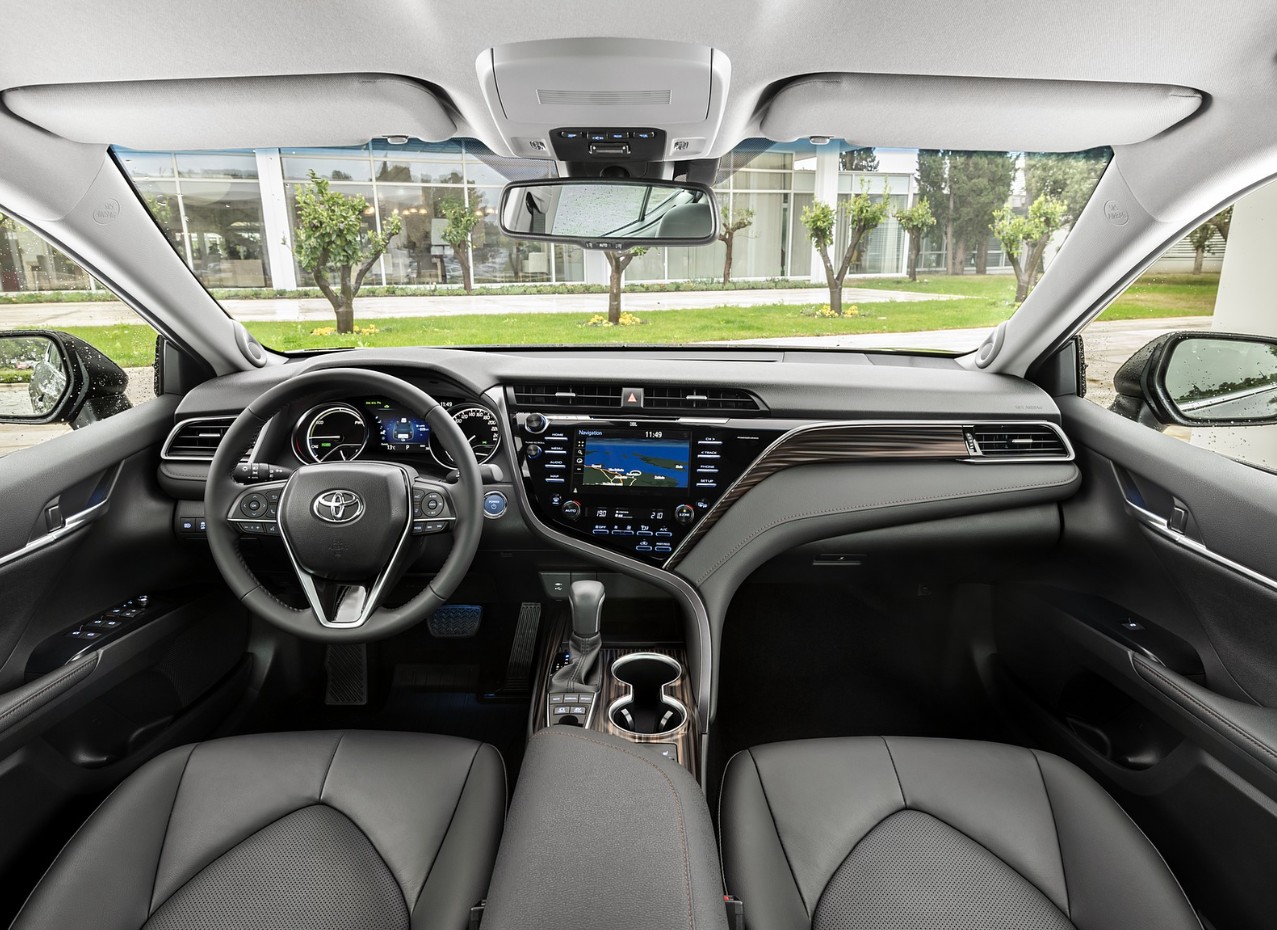
The interior of the 2028 Toyota Camry Hybrid should continue to focus on comfort, straightforward controls, and practical technology. The latest generation already offers a more modern cabin than earlier Camry models, with a horizontal dashboard layout, a clearly positioned infotainment screen, and a center console designed to provide useful storage. Toyota could refine the materials and finish for 2028, particularly in areas that drivers and passengers touch regularly. Additional soft-touch surfaces, revised decorative trim, improved seat upholstery, and better cabin insulation would help the sedan maintain a competitive position against newer midsize cars. A quieter interior would be especially welcome in a hybrid because the gasoline engine can start and stop during normal driving.
Infotainment is another area where buyers may expect gradual improvement. The 2027 Camry offers an 8-inch Toyota Audio Multimedia touchscreen on the LE grade, while selected higher trims receive a 12.3-inch display. Wireless Apple CarPlay and Android Auto compatibility help integrate smartphones without requiring a cable, while voice recognition provides another way to access selected functions. For 2028, Toyota could improve system responsiveness, refine voice-command recognition, and expand connected navigation or entertainment services. It may also consider making the larger display available on more versions. However, there is no confirmed 2028 screen size or new multimedia platform, so these possibilities should not be presented as finalized equipment.
The driver’s information display could receive similar attention. The current Camry offers an available 12.3-inch digital gauge cluster and an available head-up display, allowing important driving information to be presented more clearly. A future update could introduce revised graphics, additional customization, and improved integration between navigation instructions and hybrid-system information. Drivers may benefit from clearer displays showing energy flow, battery assistance, fuel consumption, and driving mode. Wireless charging, USB connections, and available premium audio should also remain important convenience features. Toyota could improve the placement of charging ports or expand equipment availability across the trim range, but the final 2028 technology package has not yet been announced.
Passenger comfort and everyday usability should remain central to the Camry Hybrid’s appeal. The sedan offers seating for five, a practical rear bench, and a cabin layout suitable for commuting, family transportation, and longer journeys. The 2027 range includes features such as dual-zone automatic climate control with rear-seat vents, while higher grades offer additional comfort equipment including heated front seats, available ventilation, and driver-seat memory. Toyota could expand the availability of these features or introduce new upholstery combinations for 2028. Improved seat cushioning and additional sound insulation would also be useful refinements. The goal would be to make the cabin feel more polished without sacrificing the clear visibility, useful storage, and straightforward operation expected from a midsize family sedan. 2028 Toyota Camry Hybrid Review
2028 Toyota Camry Hybrid Specs
Engine & Performance
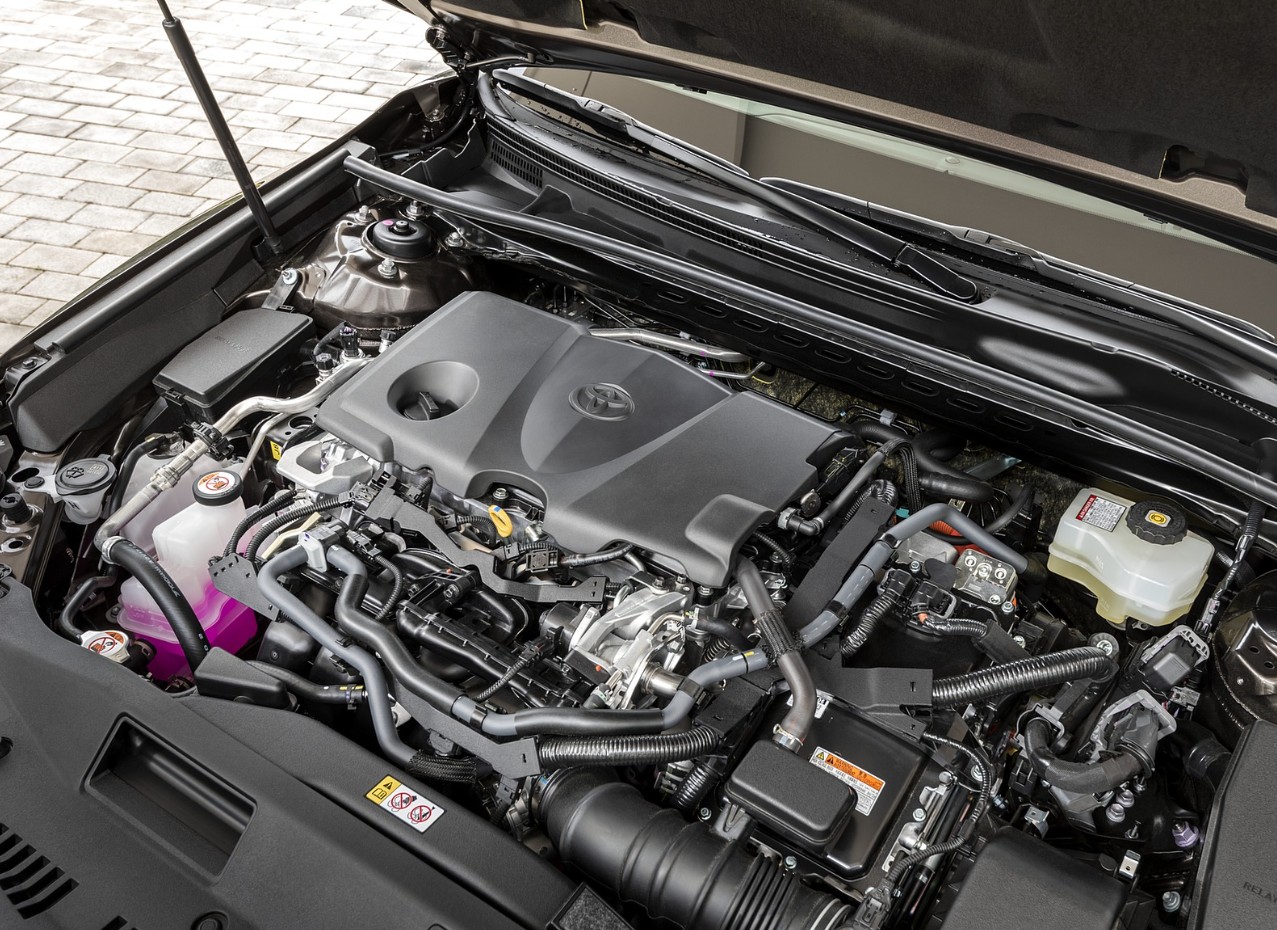
The powertrain is expected to remain the defining feature of the 2028 Toyota Camry Hybrid. The current U.S. model uses Toyota’s fifth-generation Hybrid System, combining a 2.5-liter four-cylinder gasoline engine with electric motor assistance. This arrangement produces up to 225 net combined horsepower in front-wheel-drive versions and up to 232 net combined horsepower when equipped with electronic on-demand all-wheel drive. Rather than relying on a traditional gasoline engine alone, the system coordinates engine power and electric assistance to deliver smooth acceleration and efficient operation. Toyota has not confirmed a new engine or hybrid-system upgrade for 2028, making the existing 2.5-liter configuration the most reliable reference point for the next model.
The hybrid system is designed to work automatically, so drivers do not need to manage the relationship between the gasoline engine and electric motors. During low-speed driving and light acceleration, electric assistance can help reduce fuel consumption and provide responsive initial movement. When more power is required, the gasoline engine contributes additional output, with the hybrid control system balancing performance and efficiency. The electronically controlled continuously variable transmission helps deliver power smoothly across different driving conditions. For 2028, Toyota could refine throttle response, engine transitions, and hybrid control software to make acceleration feel more natural. These improvements would be useful in everyday traffic, although no official changes to the transmission or system output have been announced.
Available electronic on-demand all-wheel drive adds another dimension to the Camry Hybrid’s performance. The system uses an additional electric motor to help power the rear wheels when the vehicle detects a need for extra traction. This arrangement can improve confidence when accelerating on slippery roads or driving in changing weather conditions. It also avoids the need for a conventional mechanical connection between the front and rear axles. Front-wheel drive remains an attractive option for buyers who prioritize fuel economy, while AWD provides additional traction capability for those who regularly encounter rain, snow, or uneven road surfaces. Toyota could continue offering both configurations in 2028, but the final drivetrain availability has not been confirmed. 2028 Toyota Camry Hybrid Review
2028 Toyota Camry Hybrid Fuel Economy
Fuel efficiency is likely to remain one of the strongest reasons to consider the 2028 Toyota Camry Hybrid. For the 2027 U.S. model, Toyota lists an estimated combined rating of up to 51 mpg for the LE front-wheel-drive grade. Other front-wheel-drive versions are rated at approximately 46 mpg combined, while all-wheel-drive grades have different ratings depending on trim and wheel configuration. These figures provide a useful indication of the current model’s efficiency, but they are not official 2028 ratings. Toyota could improve fuel consumption through software calibration, aerodynamic refinements, or lower-resistance tires. Actual results will continue to depend on traffic, temperature, driving style, road conditions, and the selected drivetrain. No verified 2028 EPA fuel-economy figures are available yet.
2028 Toyota Camry Hybrid Safety Features
Safety technology should remain a major part of the 2028 Toyota Camry Hybrid package. The current generation includes Toyota Safety Sense 3.0, which combines several driver-assistance systems designed to help detect potential hazards and support safer driving. Its features include a pre-collision system with pedestrian detection, lane departure alert with steering assist, lane tracing assist, full-speed-range dynamic radar cruise control, road sign assist, automatic high beams, and proactive driving assistance. These systems are particularly useful for drivers who spend significant time commuting or traveling on highways. Toyota may refine their software or sensor performance for 2028, but there is no confirmation that the Camry will receive a completely new safety-system generation.
Blind-spot monitoring and rear cross-traffic alert are also valuable features in a midsize sedan. The current Camry includes blind-spot monitoring, with additional parking and visibility technologies available depending on grade and package. Selected configurations can offer front and rear parking assist with automatic braking, helping drivers maneuver in crowded spaces. A panoramic view monitor and front cross-traffic alert may also be available on certain versions or equipment packages. For 2028, Toyota could expand the availability of these systems, especially on lower-priced grades where buyers may appreciate more standard equipment. The final feature list will depend on the market and trim configuration, so equipment from one country’s Camry should not automatically be assumed to apply elsewhere.
The vehicle’s passive safety equipment is just as important as its electronic assistance systems. The current U.S. Camry provides eight airbags, including advanced front airbags and side-curtain protection for occupants. Its structural design, seatbelts, braking system, and electronic stability controls work together to help protect occupants and maintain vehicle control. A future model-year update could bring refinements to restraint calibration or selected structural components, but Toyota has not announced specific 2028 safety engineering changes. Crash-test ratings should also be checked against the actual model year and vehicle tested. A rating awarded to the current generation should not automatically be described as a confirmed rating for a future 2028 vehicle.
The 2027 U.S. lineup provides a useful guide to the trim structure Toyota could retain for 2028. Five grades are currently offered: LE, SE, Nightshade, XLE, and XSE. LE focuses on value, everyday comfort, and maximum efficiency. SE introduces a sportier appearance, including distinctive wheels and sport-inspired exterior details. Nightshade adds darker styling elements and black-finished wheels for a more distinctive look. XLE emphasizes comfort and premium equipment, while XSE combines higher-level features with a sportier design and suspension tuning. Toyota may carry these grades into 2028 with revised equipment, new packages, or different standard features. No official 2028 trim list has been released.
2028 Toyota Camry Hybrid Release Date & Price
Toyota has not announced official pricing for the 2028 Camry Hybrid, so the 2027 model is the most useful reference for estimating its likely position. In the United States, the 2027 Camry starts at $29,700 for the LE grade, before destination and handling charges. The SE starts at $32,200, Nightshade at $33,200, XLE at $34,900, and XSE at $36,100. These prices establish a clear range from an efficiency-focused entry model to more richly equipped sport and comfort versions. The 2028 model could receive a modest increase if Toyota adds equipment or adjusts its pricing structure, but no official MSRP has been published.
A possible 2028 price adjustment would depend on the extent of the model-year changes. If Toyota carries over the current design and powertrain with only minor equipment revisions, pricing could remain relatively close to the 2027 range. A more substantial update involving additional standard technology, upgraded interior materials, or revised hybrid components could justify a larger increase. Buyers should also account for destination charges, optional packages, accessories, taxes, and dealer pricing when estimating the final purchase cost. Any projected 2028 dollar figure should be treated as an editorial estimate rather than an official Toyota price. The LE is likely to remain the most accessible grade, while XLE and XSE would continue to occupy the upper end of the range.
The release date has not been confirmed. Toyota announced the 2027 Camry in October 2026, describing it as a carryover model with the same five grades, hybrid powertrain strategy, and core equipment structure. If Toyota follows a conventional annual model-year schedule, information about the 2028 Camry Hybrid could appear during 2027, with dealership availability potentially following around the transition into the 2028 model year. This is only a reasonable planning assumption, not a confirmed launch schedule. Toyota has not announced a public reveal date, production start, reservation period, or showroom arrival window for the 2028 vehicle. A significant product change or manufacturing adjustment could also affect timing.
Availability and specifications will vary across international markets. The U.S. Camry Hybrid lineup, trim names, horsepower figures, and fuel-economy ratings do not automatically apply to Indonesia or other Southeast Asian countries. Local versions may have different equipment, powertrain calibration, safety features, and pricing because of regional regulations, taxes, and market requirements. Indonesian buyers should follow announcements from Toyota Astra Motor for confirmed local specifications and availability. The final price will depend on the vehicle’s local configuration, applicable taxes, and distribution arrangements. At this stage, Toyota has not confirmed a 2028 Camry Hybrid launch date or local price for Indonesia, so overseas estimates should not be treated as Indonesian-market information.
Conclusion
The 2028 Toyota Camry Hybrid is expected to continue the formula that has made the Camry a strong choice among midsize sedan buyers: excellent fuel efficiency, smooth hybrid performance, comfortable passenger space, and useful technology. The current 2.5-liter hybrid system already delivers up to 232 net combined horsepower, while the LE front-wheel-drive version achieves an estimated 51 mpg combined in the United States. Potential improvements to exterior styling, infotainment, cabin materials, and driver assistance could make the next model even more appealing. However, Toyota has not confirmed the 2028 specifications, fuel-economy ratings, trim lineup, pricing, or release date. Until official details become available, the 2027 Camry Hybrid remains the most dependable reference for understanding what the next model may offer.
Note: This blog post’s material is primarily sourced from resources that were available previous to the product’s release. For the most up-to-date information, contact your local dealership or consult official sources.
Frequently Asked Questions
2028 Toyota Camry Hybrid Review, Specs, Interior - The 2028 Toyota Camry Hybrid is expected to continue the evolution of one of the world's most recognizable hybrid sedans, combining everyday comfort, impressive fuel efficiency, and increasingly sophisticated technology. Toyota has already made hybrid power the standard across the…
2028 Toyota Camry Hybrid Redesign and Update Plan Exterior & Interior The 2028 Toyota Camry Hybrid is likely to build on the ninth-generation design introduced for the 2025 model year. Rather than expecting an entirely new platform after only a few years, buyers should anticipate the possibility of…
At the front, the current Camry uses a low, wide stance and a distinctive hammerhead-inspired design that gives it a more athletic character than previous generations. Slim LED lighting elements, a sculpted hood, and a broad lower grille create a modern appearance while supporting the car's aerodynamic profile.…
The side profile is another area where Toyota could introduce small but noticeable changes. The current Camry combines a long hood, flowing roofline, defined shoulder surfaces, and a relatively wide stance to create a balanced sedan silhouette. For 2028, new alloy-wheel designs could provide the most visible difference,…
At the rear, a revised bumper, updated LED taillight graphics, and more carefully integrated trim details could provide a subtle visual update. The current Camry already has a wide rear design that complements its low roofline and modern front fascia, so Toyota may decide that extensive changes are…