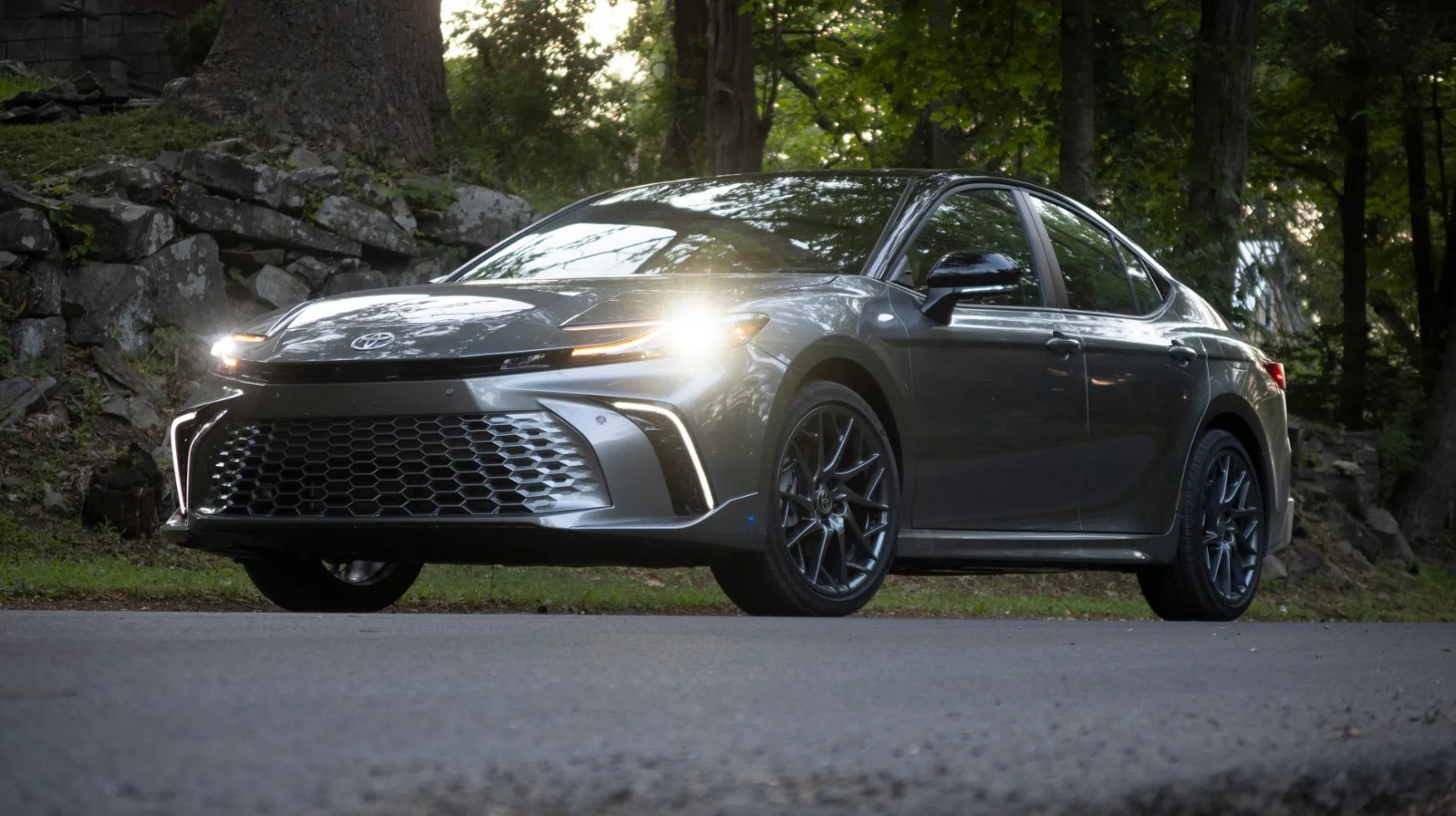
2028 Toyota Camry Release Date, Price, Specs – The 2028 Toyota Camry could become an important chapter in the evolution of one of the world’s best-known midsize sedans. Following the introduction of the ninth-generation Camry for the 2025 model year, Toyota has shifted the nameplate toward an exclusively hybrid lineup in the United States, combining improved efficiency with stronger everyday performance and a more modern cabin. A 2028 model would likely build on that foundation rather than require an immediate complete redesign. Buyers can reasonably expect continued development of the hybrid system, updated technology, fresh exterior details, and additional convenience features, although Toyota has not yet confirmed the 2028 Camry’s specifications, pricing, or launch date. The following preview separates the current model’s established features from possible changes for 2028. 2028 Toyota Camry Release Date
2028 Toyota Camry Redesign and Update Plan
Exterior & Interior
The current-generation Toyota Camry already represents a substantial change from its predecessor, so a complete redesign for 2028 is not guaranteed. Toyota introduced the ninth-generation sedan for 2025 with a more athletic appearance, a revised platform setup, and a fifth-generation Toyota Hybrid System. A likely direction for the 2028 model would be a carefully developed mid-cycle update, focusing on details that keep the sedan competitive without abandoning its existing design. Toyota could revise the front bumper, grille pattern, lighting signatures, wheel designs, and exterior color selection. Such changes would give the car a fresher appearance while preserving the recognizable proportions and engineering of the current generation.
At the front, the Camry’s distinctive hammerhead-inspired styling provides a strong starting point for future updates. The low nose, slim lighting elements, and broad lower grille give the sedan a more confident appearance than earlier versions. For 2028, Toyota could refine the headlamp graphics, introduce revised LED daytime running lights, and adjust the bumper openings for a cleaner visual effect. A more detailed grille finish could help distinguish the standard grades from sport-oriented SE and XSE versions. These potential changes would be evolutionary rather than revolutionary, allowing Toyota to maintain the current Camry’s modern identity while adding enough visual distinction to attract buyers considering newer rivals.
The side profile is likely to retain the sedan’s long hood, sloping roofline, and relatively wide stance. Toyota could introduce new alloy-wheel patterns, revised dark exterior accents, and additional paint choices to give the 2028 Camry a more personalized appearance. Sport-oriented grades may continue to use more aggressive wheel designs, darker trim, and distinctive body details, while comfort-focused versions could emphasize a cleaner and more elegant finish. The existing platform already provides a stable foundation for the sedan’s proportions, so a major increase in exterior dimensions is not essential. Any changes to wheelbase, length, or width remain unconfirmed, and buyers should not assume that the 2028 car will be larger than the current model.
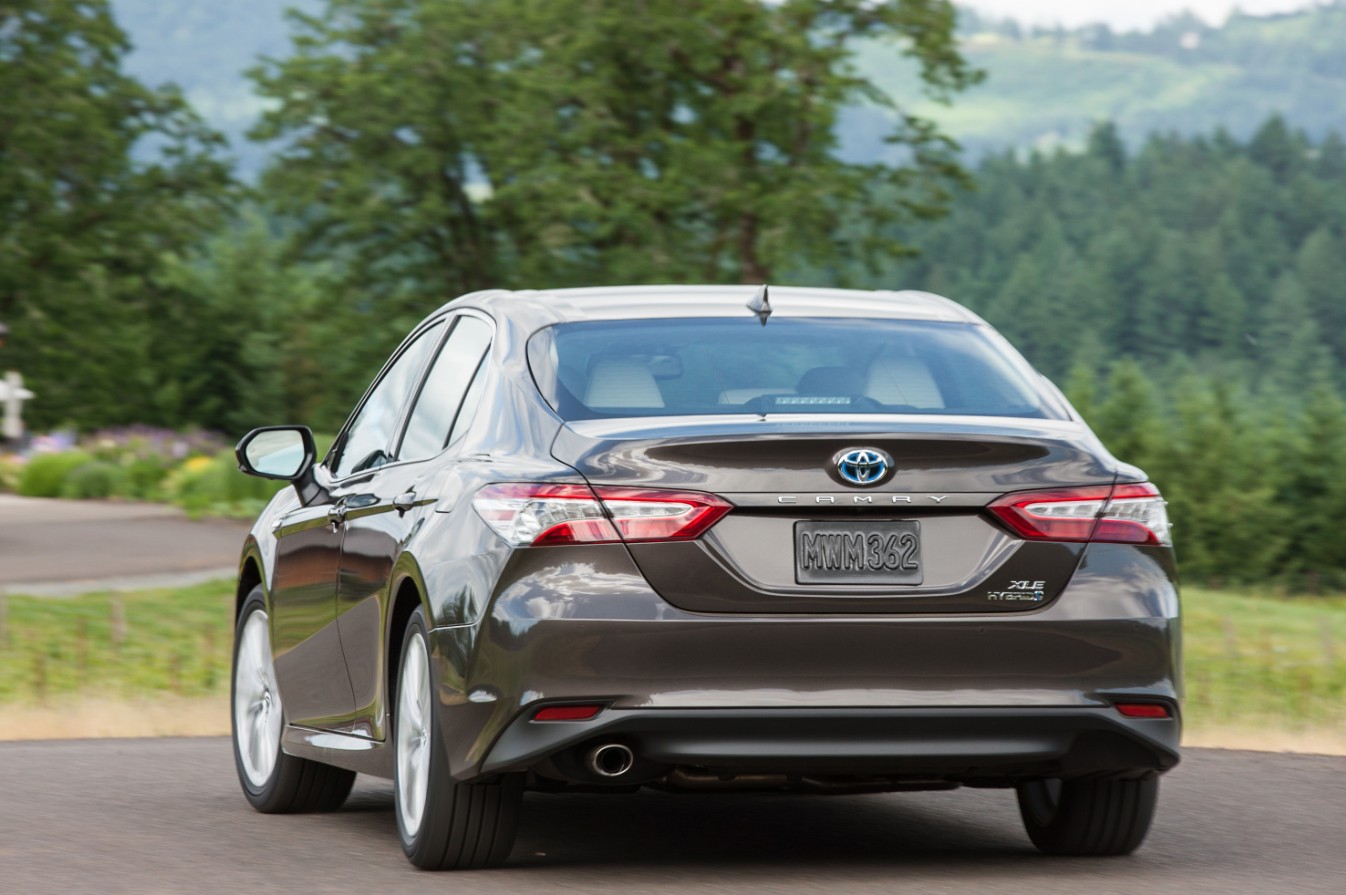
At the rear, the Camry could receive updated taillight graphics, a revised bumper design, and subtle changes to the trunk area. The current generation uses a wide, modern rear appearance that complements its front styling, while the XSE grade adds a sportier visual character. Toyota may continue offering different exterior treatments across its trim range rather than creating one design for every buyer. Aerodynamic refinement could also remain part of the development process, particularly because reducing air resistance can help improve hybrid efficiency and cabin quietness. However, no official images or design specifications for the 2028 Camry have been released. Until Toyota reveals the vehicle, descriptions of its exterior changes should be treated as projections based on the current generation’s design direction.
The 2028 Toyota Camry is expected to retain the current generation’s driver-focused cabin while potentially receiving a series of technology and material improvements. The latest interior already moves the sedan closer to the premium end of the mainstream segment, with a horizontal dashboard layout, a neatly integrated center display, and controls arranged for convenient access. Toyota could refine this design with upgraded soft-touch surfaces, more detailed decorative trim, improved seat materials, and additional sound insulation. A quieter cabin would be particularly valuable in a hybrid sedan because the gasoline engine can switch on and off during normal driving. Reducing road and wind noise would make those transitions less noticeable and improve comfort during longer journeys.
The infotainment system should remain a central part of the 2028 Camry experience. The 2027 model offers an 8-inch Toyota Audio Multimedia touchscreen on the LE grade and a larger 12.3-inch display on selected higher trims. Wireless Apple CarPlay and Android Auto compatibility provide convenient smartphone integration, while voice recognition allows drivers to access selected functions without repeatedly using the touchscreen. Toyota could extend these capabilities with faster processing, improved voice recognition, more responsive navigation, and expanded connected services. A larger standard display across more grades is another possible update, although no screen-size changes have been confirmed for 2028. The focus should be on making everyday interactions simpler rather than adding technology that distracts from driving.
Driver information could also become more sophisticated. The current Camry offers an available 12.3-inch digital gauge cluster and a head-up display on selected configurations, allowing important information to appear directly in the driver’s line of sight. A future update could improve the graphics, provide more customizable layouts, and make navigation instructions easier to read. Toyota may also refine the way hybrid-system information is presented, helping drivers understand energy flow, battery assistance, and fuel-saving driving behavior. Wireless smartphone charging, multiple USB ports, and available premium audio are expected to remain relevant equipment areas. The 2027 lineup already offers a range of these convenience features, so any 2028 changes are more likely to involve refinement and wider availability than a complete technological reset.
Passenger comfort and cabin practicality should remain major strengths. The Camry’s five-seat layout provides space for families, business users, and commuters, while its rear seating area is designed to accommodate adult passengers more comfortably than many compact sedans. The current model offers dual-zone automatic climate control with rear-seat vents, and selected grades add heated and ventilated front seats, a heated steering wheel, and driver-seat memory. Toyota could expand the availability of these features or introduce new upholstery combinations for the 2028 model. Storage areas, cupholders, door pockets, and the center console should continue to support everyday use. A redesigned seat cushion or revised cabin trim could make the next model feel fresher without requiring a new interior architecture. 2028 Toyota Camry Release Date
2028 Toyota Camry Specs
Engine & Performance
The 2028 Toyota Camry is expected to continue using hybrid technology as its primary powertrain strategy, particularly in the United States, where Toyota has already moved the current generation to an exclusively hybrid lineup. The 2027 model uses the fifth-generation Toyota Hybrid System with a 2.5-liter four-cylinder gasoline engine and electric motor assistance. Front-wheel-drive versions produce up to 225 net combined horsepower, while models equipped with electronic on-demand all-wheel drive deliver up to 232 net combined horsepower. This setup provides a useful balance between fuel efficiency and everyday acceleration. Toyota has not announced a different engine or a new hybrid system for 2028, so the current configuration is the most reasonable reference point when discussing the next model.
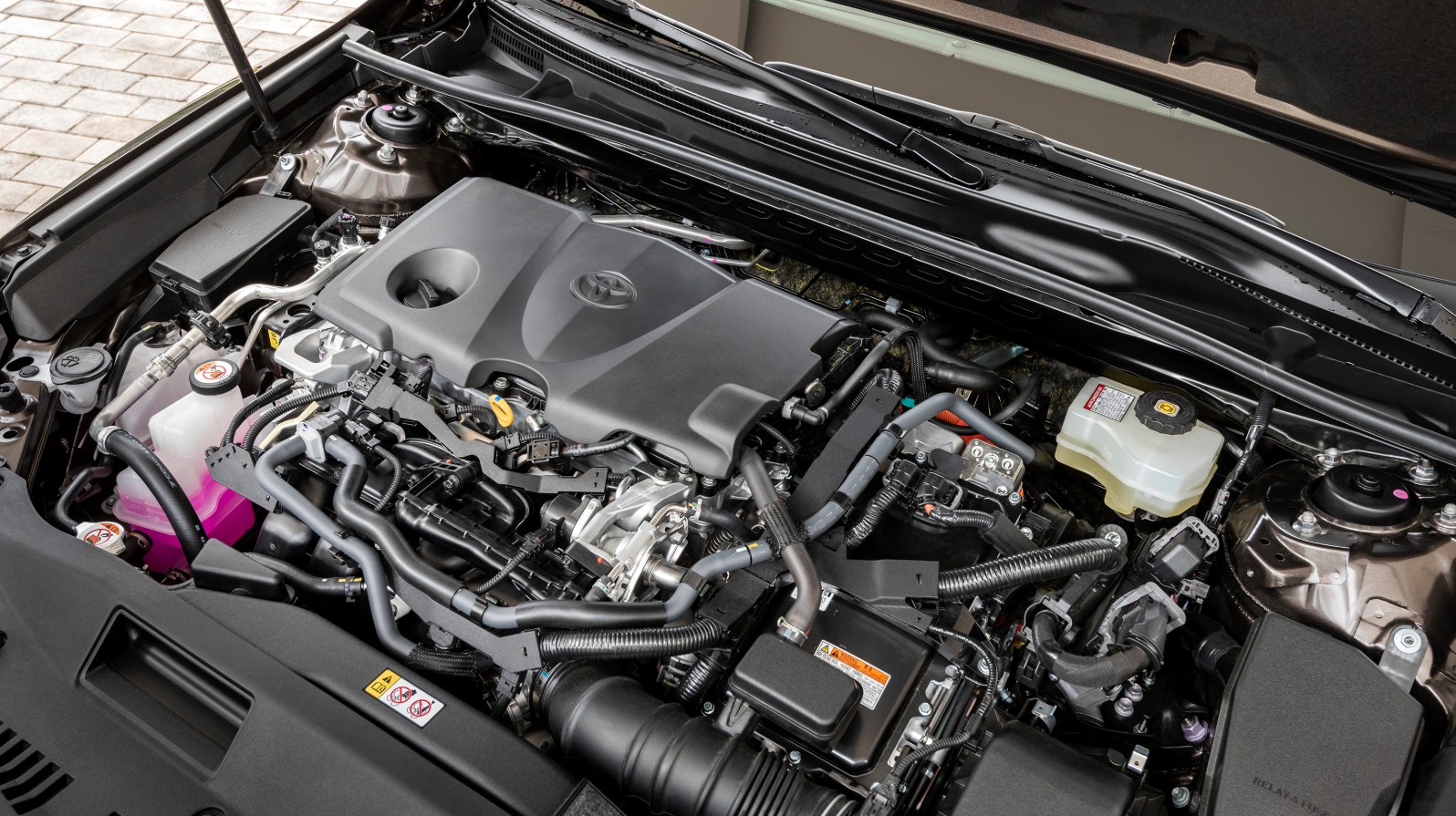
The hybrid system is designed to deliver smooth power in normal traffic rather than the abrupt response associated with some traditional automatic transmissions. Electric motor assistance provides useful torque when moving away from a stop, while the gasoline engine contributes power as speed increases or when stronger acceleration is required. The system uses an electronically controlled continuously variable transmission to manage the relationship between the engine and electric motors. Drivers can select different driving modes, including Normal, Sport, and Eco, with an EV mode available for limited low-speed operation when conditions allow. Toyota could make small refinements to throttle response, hybrid control software, and noise management for 2028, but there is no confirmed performance upgrade or acceleration figure at this stage.
All-wheel drive is another important part of the Camry’s appeal. Toyota’s electronic on-demand AWD system uses an additional electric motor to help drive the rear wheels when extra traction is needed. This arrangement can improve confidence on wet roads and during acceleration on slippery surfaces without requiring a conventional mechanical driveshaft connection to the rear axle. Front-wheel drive should remain the efficiency-focused choice, while AWD may appeal to buyers who regularly encounter rain, snow, or variable road conditions. Suspension tuning is also likely to remain different across grades, with comfort-oriented models prioritizing ride quality and sport-focused SE and XSE versions offering a firmer character. Any changes to steering, dampers, or chassis calibration for 2028 have not been confirmed.
2028 Toyota Camry Fuel Economy
Fuel economy is one of the Camry’s strongest selling points and should remain central to its appeal. For the 2027 U.S. model, Toyota lists an estimated 51 mpg combined for the LE front-wheel-drive grade, with an estimated 52 mpg city and 49 mpg highway. Other front-wheel-drive grades are rated at approximately 46 mpg combined, while all-wheel-drive versions vary according to trim and wheel configuration. These are 2027 figures, not official 2028 ratings. A future update could improve efficiency through revised hybrid software, lower rolling-resistance tires, or aerodynamic refinements, but there is no confirmed target. Actual fuel consumption will depend on driving style, traffic, temperature, road conditions, and vehicle configuration. Toyota is likely to preserve efficiency as a priority rather than sacrifice it for a large increase in power.
2028 Toyota Camry Safety Features
Safety technology should remain a major part of the 2028 Toyota Camry package. The current generation comes with Toyota Safety Sense 3.0, a collection of active driver-assistance systems designed to help drivers recognize potential hazards and respond more effectively. Its equipment includes a pre-collision system with pedestrian detection, lane departure alert with steering assist, lane tracing assist, full-speed-range dynamic radar cruise control, road sign assist, automatic high beams, and proactive driving assistance. These systems support the driver in different traffic situations, from highway cruising to urban journeys. Toyota could refine sensor performance and software calibration for 2028, but it has not announced a new safety-system generation for the Camry.
Blind-spot monitoring and rear cross-traffic alert are also important features for a sedan used regularly in busy traffic and crowded parking areas. The current Camry includes blind-spot monitoring, while selected equipment packages add further assistance features such as front cross-traffic alert, a panoramic view monitor, and front and rear parking assist with automatic braking. These technologies can help drivers detect vehicles approaching from less visible angles and judge the space around the car when maneuvering. A 2028 update could make some of these systems standard on more trim levels, particularly if Toyota wants to strengthen the value of its entry and midrange grades. However, the final equipment list will depend on Toyota’s official model-year announcement and market-specific specifications.
The Camry’s underlying body structure, airbag system, braking equipment, and stability-control technology will continue to play an equally important role. The current U.S. model includes eight airbags, along with electronic safety systems designed to help maintain control during emergency maneuvers. A future model-year update could bring adjustments to structural materials, restraint-system calibration, or available parking assistance, but no specific 2028 crash-protection changes have been disclosed. Independent crash-test ratings should also be checked when the relevant organizations evaluate the actual 2028 production vehicle. Ratings from the current generation should not automatically be described as ratings for a future model, even if the basic platform remains unchanged.
The 2027 U.S. Camry range provides a likely starting point for understanding the possible 2028 trim structure. Toyota currently offers five grades: LE, SE, Nightshade, XLE, and XSE. The LE focuses on value and fuel efficiency, while the SE introduces sportier exterior details and a more athletic cabin appearance. Nightshade adds distinctive dark styling, including black-finished wheels and exterior accents. XLE emphasizes comfort and premium equipment, while XSE combines higher-level features with sportier design and suspension tuning. Toyota could carry these grades into 2028, revise their standard equipment, or adjust the package structure. No official 2028 trim list has been released, so these names should be treated as a likely reference rather than a confirmed lineup.
2028 Toyota Camry Release Date & Price
Toyota has not published an official price list for the 2028 Camry. The 2027 U.S. model provides the clearest current benchmark, with a starting MSRP of $29,700 for the LE grade before destination and handling charges. The SE starts at $32,200, Nightshade at $33,200, XLE at $34,900, and XSE at $36,100. These prices demonstrate how Toyota positions the Camry across value, sport, and comfort categories. A 2028 model could receive a modest price adjustment if Toyota adds equipment, changes materials, or responds to higher production costs. However, it would be premature to publish a precise 2028 MSRP before the manufacturer confirms its pricing.
For planning purposes, a small increase over the 2027 starting price would be a reasonable possibility if the 2028 model remains a carryover or receives only a modest update. The LE could remain the most affordable version, while SE and Nightshade grades would appeal to customers who prefer a more distinctive appearance. XLE and XSE models would likely sit toward the top of the range because of their additional comfort, technology, and styling equipment. Optional packages, all-wheel drive, dealer-installed accessories, and destination charges could increase the final transaction price. These are general pricing expectations, not Toyota estimates or confirmed dealer figures. Buyers should wait for the official model-year announcement before making a purchasing decision based on projected prices.
The release date has not been confirmed either. Toyota’s current 2027 Camry was announced in October 2026, with dealership availability expected during the fall of that year. If Toyota follows a similar annual product schedule, information about the 2028 Camry could emerge during 2027, followed by showroom arrivals around the transition into the 2028 model year. That is only a possible timetable based on normal model-year planning. A major redesign, production adjustment, or change in market strategy could affect the schedule. No official reveal date, production start, reservation window, or dealership arrival date has been announced for the 2028 Camry.
International availability deserves separate consideration because Toyota does not sell the same Camry configuration in every country. U.S. trim names, prices, equipment, and fuel-economy ratings do not automatically apply to markets such as Indonesia. Local specifications may differ in engine calibration, hybrid equipment, safety technology, infotainment features, and available grades. Indonesian buyers should look for announcements from Toyota Astra Motor rather than relying on U.S. pricing projections or overseas dealership information. Taxes, import arrangements, local equipment requirements, and exchange rates can all influence the final price. Until Toyota provides a regional announcement, there is no confirmed Indonesian launch date or local price for a 2028 Camry.
Conclusion
The 2028 Toyota Camry is expected to build on the strengths of the current generation, with hybrid efficiency, comfortable passenger space, modern connectivity, and a choice of practical or sport-inspired trim levels remaining central to its identity. Rather than expecting an entirely new vehicle, buyers should watch for refinements to exterior styling, cabin materials, infotainment technology, and driver-assistance features. The existing 2.5-liter hybrid system already delivers a strong combination of performance and fuel economy, giving Toyota a solid foundation for the next model year. However, the final 2028 specifications, official fuel-economy ratings, trim lineup, prices, and release date have not been announced. Until Toyota confirms those details, the 2027 Camry remains the most reliable guide to what the next model could offer.
Note: This blog post’s material is primarily sourced from resources that were available previous to the product’s release. For the most up-to-date information, contact your local dealership or consult official sources.
Frequently Asked Questions
2028 Toyota Camry Release Date, Price, Specs - The 2028 Toyota Camry could become an important chapter in the evolution of one of the world's best-known midsize sedans. Following the introduction of the ninth-generation Camry for the 2025 model year, Toyota has shifted the nameplate toward an exclusively…
2028 Toyota Camry Redesign and Update Plan Exterior & Interior The current-generation Toyota Camry already represents a substantial change from its predecessor, so a complete redesign for 2028 is not guaranteed. Toyota introduced the ninth-generation sedan for 2025 with a more athletic appearance, a revised platform setup, and…
At the front, the Camry's distinctive hammerhead-inspired styling provides a strong starting point for future updates. The low nose, slim lighting elements, and broad lower grille give the sedan a more confident appearance than earlier versions. For 2028, Toyota could refine the headlamp graphics, introduce revised LED daytime…
The side profile is likely to retain the sedan's long hood, sloping roofline, and relatively wide stance. Toyota could introduce new alloy-wheel patterns, revised dark exterior accents, and additional paint choices to give the 2028 Camry a more personalized appearance. Sport-oriented grades may continue to use more aggressive…
At the rear, the Camry could receive updated taillight graphics, a revised bumper design, and subtle changes to the trunk area. The current generation uses a wide, modern rear appearance that complements its front styling, while the XSE grade adds a sportier visual character. Toyota may continue offering…