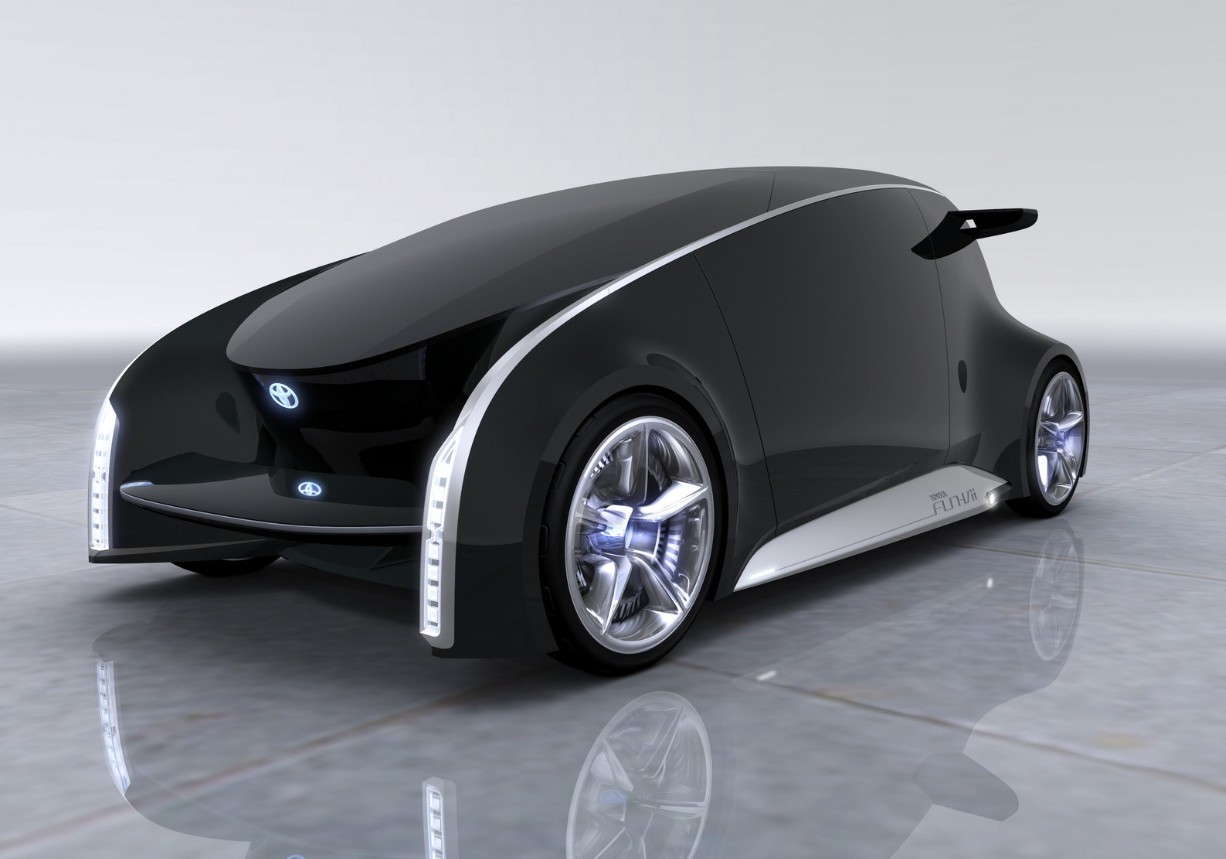
2028 Toyota FUN-VII Specs, Price, Interior – The original Toyota FUN-VII was unveiled at the 2011 Tokyo Motor Show as a vision of a future in which people, vehicles, and society would be connected through digital technology. Rather than presenting a conventional production car with a finished engine and equipment list, Toyota used the concept to explore how a vehicle could become an interactive communication device. Its most recognizable feature was the ability to transform the exterior body into a large digital display, allowing the owner to change its appearance, show images, or communicate information. The cabin followed the same philosophy, with digital content and navigation information integrated into the interior environment. This made the FUN-VII less about traditional transportation specifications and more about redefining the relationship between a driver and a vehicle.
A hypothetical 2028 interpretation would need to preserve that original identity while adapting it to the technology and expectations of modern drivers. The biggest change would likely involve replacing the experimental display concept with more sophisticated, energy-efficient exterior display surfaces and a fully connected software platform. Modern high-resolution panels, advanced projection systems, and flexible digital materials could make personalization more detailed and responsive than it was in 2011. Instead of simply choosing a body color or graphic, drivers might be able to select different visual themes for different occasions, display charging information, or activate a restrained night-time appearance. These are possible directions for a future concept, not confirmed Toyota features or a published redesign plan for 2028.
The technology inside the vehicle could also evolve from a collection of innovative functions into a unified digital environment. A modern FUN-VII could connect the instrument display, infotainment interface, navigation system, voice assistant, and exterior display through one central software architecture. The driver might be able to personalize the layout, select information priorities, and synchronize certain settings with a smartphone or personal account. Over-the-air updates could improve navigation data, multimedia functions, and selected vehicle software without requiring a traditional dealership visit for every update. Toyota already introduced the idea of network-based software updates in the original concept, so this would be a natural development of its original vision rather than an unrelated feature.
The redesign would also need to address the practical requirements that separate an imaginative show car from a usable road vehicle. A production-oriented version would require a carefully engineered body structure, reliable weather-resistant display surfaces, effective pedestrian protection, and materials capable of handling sunlight, rain, dust, and everyday contact. Digital exterior panels would need to remain readable without distracting other road users, while the vehicle’s software would need strong cybersecurity protection. Toyota has not announced a new FUN-VII development program, so there is no confirmed second-generation design, platform, or production timetable. For the 2028 keyword, the most accurate approach is to consider how the original concept might be reimagined if Toyota decided to revisit it. 2028 Toyota FUN-VII Specs
2028 Toyota FUN-VII Redesign and Update Plan
Exterior & Interior
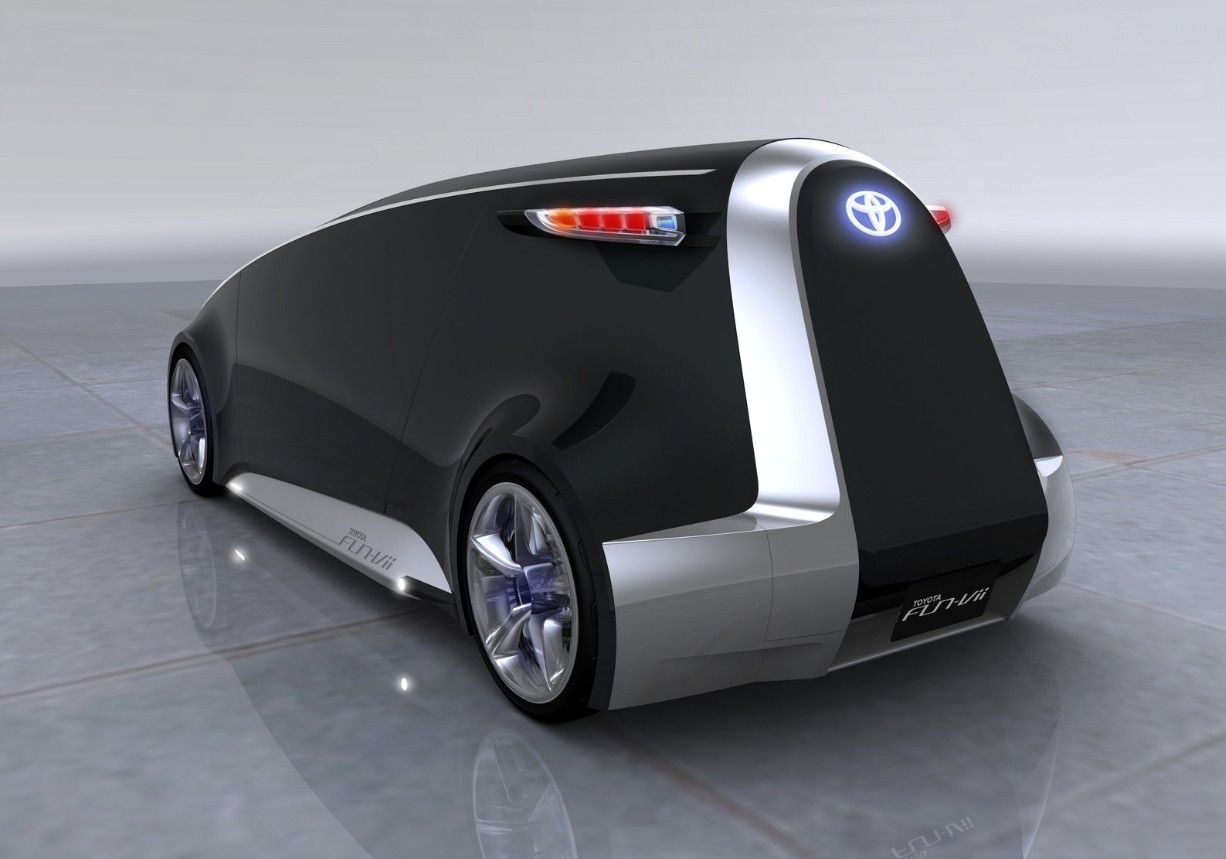
The exterior of the original FUN-VII was deliberately different from a conventional Toyota hatchback or compact car. Its body was designed as a display surface, allowing the vehicle’s appearance to be changed digitally instead of relying entirely on fixed paint colors. Toyota described the system as a way to personalize the vehicle with the ease of downloading an application. Owners could display different colors, images, and messages across the body, effectively turning the car into a moving digital canvas. This idea gave the FUN-VII an instantly recognizable appearance and demonstrated how vehicle personalization could move beyond wheels, paint finishes, and decorative accessories. A 2028 interpretation could retain this signature feature while using more advanced display technology.
A modern exterior could combine smooth aerodynamic surfaces with carefully integrated digital panels. Rather than covering every body section with a conventional screen, Toyota could theoretically use selected display zones on the doors, front bodywork, and rear panels. These areas might show personalized graphics while preserving fixed lighting, reflectors, sensors, and safety-related components. A cleaner front fascia could accommodate cameras and radar sensors, while slim LED lighting could give the vehicle a more contemporary appearance. The original FUN-VII had compact proportions, measuring approximately 4,020 millimeters long, 1,745 millimeters wide, and 1,415 millimeters high, with a 2,750-millimeter wheelbase. Those figures describe the 2011 concept, not a 2028 vehicle, whose dimensions have not been announced.
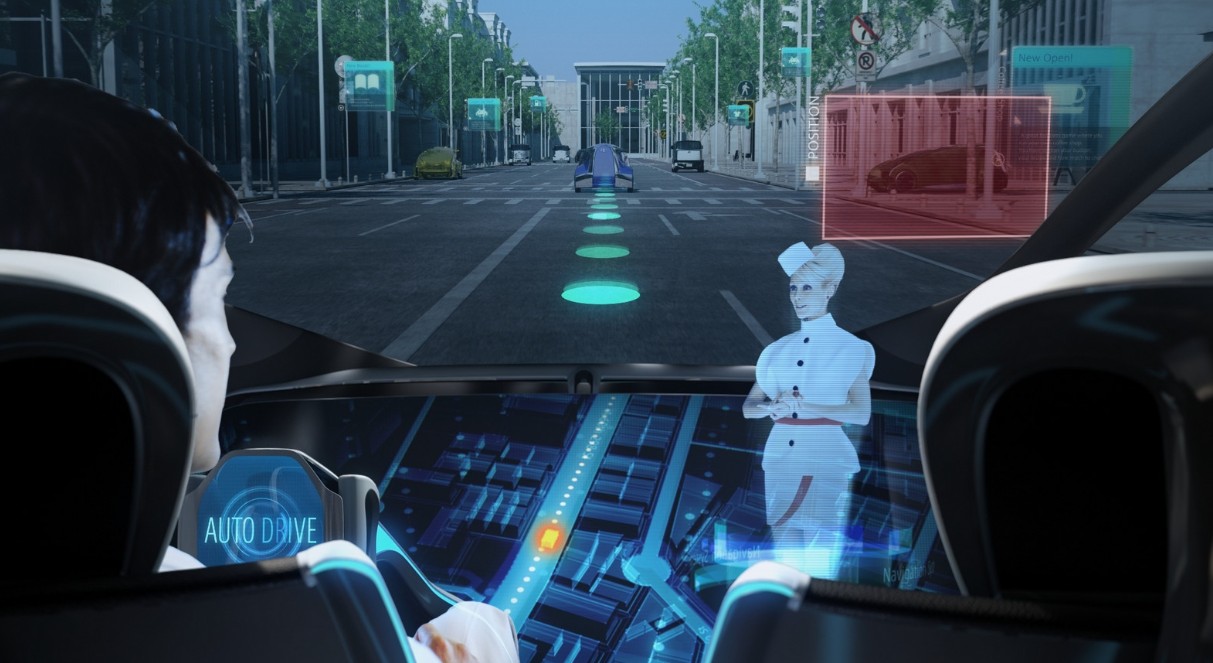
The cabin was just as important as the exterior because Toyota envisioned the entire interior as a customizable display environment. In the original concept, digital content could be adjusted to suit the driver’s mood, while navigation information was blended into the cabin through augmented-reality technology. A navigation concierge was also designed to provide driving information and guidance through a vocal interface. A modern interpretation could expand this idea with a wide digital dashboard, configurable instrument graphics, an advanced head-up display, and a voice assistant capable of handling navigation, media, climate settings, and connected services. The objective would be to make information easier to access without forcing the driver to interact with several separate screens while moving.
Passenger comfort and everyday usability would also need to become more important in a future version. The original FUN-VII was designed with three seats, giving it an unusual layout compared with most modern passenger cars. A 2028 concept could retain a distinctive three-seat configuration or adopt a more conventional arrangement depending on its intended market. The cabin could use sustainable upholstery, lightweight trim materials, ambient lighting, and configurable digital surfaces to create a more personal atmosphere. Storage areas, wireless device charging, practical cupholders, and convenient access to charging connections would be essential if Toyota wanted the vehicle to appeal beyond technology enthusiasts. None of these proposed interior features has been confirmed for a 2028 model, but they illustrate how the original design philosophy could be developed into a more usable modern vehicle.
2028 Toyota FUN-VII Specs
Engine & Performance
Toyota did not present the original FUN-VII as a conventional production vehicle with a fully documented powertrain specification. Its official concept announcement concentrated on connectivity, personalization, communication between vehicles, and the integration of digital technology into the driving experience. As a result, there is no reliable official horsepower figure, torque rating, battery capacity, acceleration time, top speed, or certified driving range that can be carried over to a supposed 2028 model. A modern FUN-VII would most naturally fit Toyota’s broader exploration of electrified mobility, but it would be inaccurate to describe a particular battery or motor configuration as confirmed. Any discussion of its performance must therefore remain a forward-looking interpretation rather than a statement of production specifications.
A fully electric powertrain would be a logical direction for a future FUN-VII because it would complement the concept’s software-focused identity. An electric platform could provide smooth acceleration, quiet operation, and flexible packaging for a cabin designed around digital interaction. The battery could be positioned beneath the passenger compartment to create a low center of gravity, while one or more electric motors could deliver power to the front wheels or all four wheels. A single-motor configuration would likely prioritize efficiency and simplicity, while a dual-motor arrangement could provide all-wheel drive and stronger acceleration. These are possible engineering approaches only; Toyota has not announced a 2028 FUN-VII electric vehicle or specified its drivetrain.
Charging technology could be another area where a modern interpretation builds on the original concept. Toyota’s FUN-VII was associated with wireless recharging in later presentations, offering an early glimpse of a vehicle that could receive energy without relying exclusively on a conventional plug-in connection. A future version could explore more efficient wireless charging equipment, intelligent charging schedules, and integration with connected parking or home-energy systems. A practical production vehicle would still need a clearly defined charging standard, battery thermal management, charging-speed capability, and reliable compatibility with public infrastructure. Toyota has not confirmed any of these specifications for a 2028 FUN-VII, and wireless charging should be regarded as part of the concept’s technological heritage rather than a guaranteed production feature. 2028 Toyota FUN-VII Specs
2028 Toyota FUN-VII Fuel Economy
Fuel economy would not be measured in traditional miles per gallon if the hypothetical 2028 FUN-VII used a fully electric powertrain. Its energy consumption would instead be expressed in kilowatt-hours per 100 kilometers or miles per kilowatt-hour, while its driving range would depend on battery size, vehicle weight, aerodynamic efficiency, tires, climate, and driving conditions. A digital display system could also require careful energy management, particularly if large exterior panels operated for extended periods. Toyota would need to balance personalization with battery efficiency so that the vehicle’s visual features did not unnecessarily reduce driving range. Because no 2028 battery capacity, motor output, or certification data exists, any numerical range or efficiency claim would be speculative.
2028 Toyota FUN-VII Safety Features
Safety was already part of the original FUN-VII vision, even though the concept was presented primarily as an information-connected vehicle. Toyota described its ability to communicate with surrounding vehicles and infrastructure, potentially identifying hazards in advance and helping the driver receive relevant information. This idea is closely related to connected-vehicle technology, often described through vehicle-to-vehicle and vehicle-to-infrastructure communication. A modern interpretation could use connected data to warn drivers about traffic congestion, road hazards, emergency vehicles, or approaching vehicles at difficult intersections. These functions would depend on compatible infrastructure, accurate data, network availability, and suitable cybersecurity safeguards. They would supplement conventional safety systems rather than replace the driver’s responsibility to observe the road.
The original concept also explored biometric vehicle access. Toyota’s presentation in Indonesia described facial recognition as part of the vehicle’s security approach, with verification required before the FUN-VII could be driven. A future system could develop this idea through secure driver authentication, personalized user profiles, and digital access permissions. Once an authorized driver is recognized, the vehicle could automatically load preferred seat settings, display themes, navigation destinations, and multimedia preferences. Strong encryption and protection against unauthorized access would be essential because a connected vehicle can contain personal information and control important functions. Any production implementation would also need alternative access methods in case facial recognition or network services were unavailable.
A modern FUN-VII could also be imagined with a more comprehensive package of active safety equipment. Potential technologies might include automatic emergency braking, pedestrian and cyclist detection, lane-departure alerts, adaptive cruise control, blind-spot monitoring, rear cross-traffic alerts, and a surround-view camera system. A head-up display or augmented-reality navigation could help present directions in the driver’s field of view, reducing the need to look down at a central screen. However, augmented-reality graphics must be designed carefully so that they do not obscure real-world hazards or overload the driver with information. Toyota has not published a safety equipment list for a 2028 FUN-VII, so these features should be understood as possible technologies for a modern concept, not confirmed specifications.
Toyota has not announced any production trim levels for the FUN-VII, and the original concept was not sold as a normal retail model. If the company ever developed a road-going successor, a tiered equipment strategy could make sense. An entry version might focus on electric mobility, essential connectivity, and a simpler digital exterior. A higher grade could add expanded display customization, more advanced driver assistance, premium cabin materials, and enhanced audio. A flagship version might offer a more sophisticated augmented-reality interface, additional connected services, and a more powerful electric drivetrain. These names and configurations are illustrative examples only; there is no official 2028 FUN-VII trim list, order guide, or confirmation that Toyota intends to commercialize the concept.
2028 Toyota FUN-VII Release Date & Price
There is no official price for the 2028 Toyota FUN-VII because Toyota has not announced the vehicle as a production model. The original FUN-VII was developed as a concept to demonstrate future possibilities, not as a vehicle with a published retail price or dealership ordering process. Its digital exterior, interactive cabin, connected communication functions, and experimental user interface would also make it difficult to estimate a realistic production cost without knowing the materials, manufacturing methods, hardware, and software that a finished vehicle would use. Any website presenting a specific 2028 FUN-VII starting price as confirmed should be treated cautiously unless Toyota provides an official announcement.
If Toyota ever decided to turn the concept into a production vehicle, pricing would depend on its position in the market. A relatively compact electric vehicle with a limited number of display panels could be developed at a different cost from a premium model featuring extensive exterior screens, advanced sensors, high-capacity batteries, and sophisticated augmented-reality technology. Software services could also influence long-term ownership costs if certain personalization or connected features required subscriptions. Toyota would need to balance the cost of the technology against the vehicle’s practical value, especially because most buyers still compare electric vehicles based on range, charging speed, reliability, cabin space, safety, and total ownership costs. There is currently no credible official price estimate for such a vehicle.
The release date is equally uncertain. Toyota has not announced a 2028 launch, production schedule, public reveal, or reservation program for a new FUN-VII. The name belongs to a concept first introduced at the 2011 Tokyo Motor Show, and the vehicle later appeared in related presentations under names including Diji and iiMo. Those appearances demonstrated the continuing interest in its ideas, but they did not establish a production program. A 2028 model-year reference should therefore be treated as a speculative editorial topic, not evidence that a new vehicle is scheduled to reach showrooms. If Toyota revisits the concept, an official announcement would be needed before a launch window could be stated with confidence.
Availability in international markets would also depend on whether Toyota chose to develop a production version at all. A vehicle built around advanced exterior displays and connected infrastructure could face different regulatory, technical, and commercial requirements in Japan, North America, Europe, and Southeast Asia. In Indonesia, any potential launch would require confirmation from Toyota Astra Motor, including local specifications, charging compatibility, pricing, after-sales support, and the availability of connected services. The original FUN-VII was shown to Indonesian audiences at the Indonesia International Motor Show in 2013, demonstrating local interest in Toyota’s technology vision. That historical appearance, however, does not confirm a future Indonesian release or a 2028 sales plan. 2028 Toyota FUN-VII Specs
Conclusion
The 2028 Toyota FUN-VII represents an intriguing opportunity to revisit one of Toyota’s most imaginative technology concepts. Its original vision of a vehicle with a customizable digital exterior, interactive interior, augmented-reality navigation, biometric access, and communication with surrounding infrastructure remains relevant as the automotive industry moves toward connected and software-defined mobility. A modern electric interpretation could bring these ideas together with more advanced batteries, intelligent driver assistance, wireless charging possibilities, and personalized digital services. Nevertheless, Toyota has not confirmed a 2028 production model, its specifications, trim levels, price, or release date. Until an official announcement appears, the FUN-VII should be viewed as a forward-looking concept with ideas that could inspire future Toyota vehicles rather than an upcoming showroom product.
Note: This blog post’s material is primarily sourced from resources that were available previous to the product’s release. For the most up-to-date information, contact your local dealership or consult official sources.
Frequently Asked Questions
2028 Toyota FUN-VII Specs, Price, Interior - The original Toyota FUN-VII was unveiled at the 2011 Tokyo Motor Show as a vision of a future in which people, vehicles, and society would be connected through digital technology. Rather than presenting a conventional production car with a finished engine…
A hypothetical 2028 interpretation would need to preserve that original identity while adapting it to the technology and expectations of modern drivers. The biggest change would likely involve replacing the experimental display concept with more sophisticated, energy-efficient exterior display surfaces and a fully connected software platform. Modern high-resolution…
The technology inside the vehicle could also evolve from a collection of innovative functions into a unified digital environment. A modern FUN-VII could connect the instrument display, infotainment interface, navigation system, voice assistant, and exterior display through one central software architecture. The driver might be able to personalize…
The redesign would also need to address the practical requirements that separate an imaginative show car from a usable road vehicle. A production-oriented version would require a carefully engineered body structure, reliable weather-resistant display surfaces, effective pedestrian protection, and materials capable of handling sunlight, rain, dust, and everyday…
2028 Toyota FUN-VII Redesign and Update Plan Exterior & Interior The exterior of the original FUN-VII was deliberately different from a conventional Toyota hatchback or compact car. Its body was designed as a display surface, allowing the vehicle’s appearance to be changed digitally instead of relying entirely on…