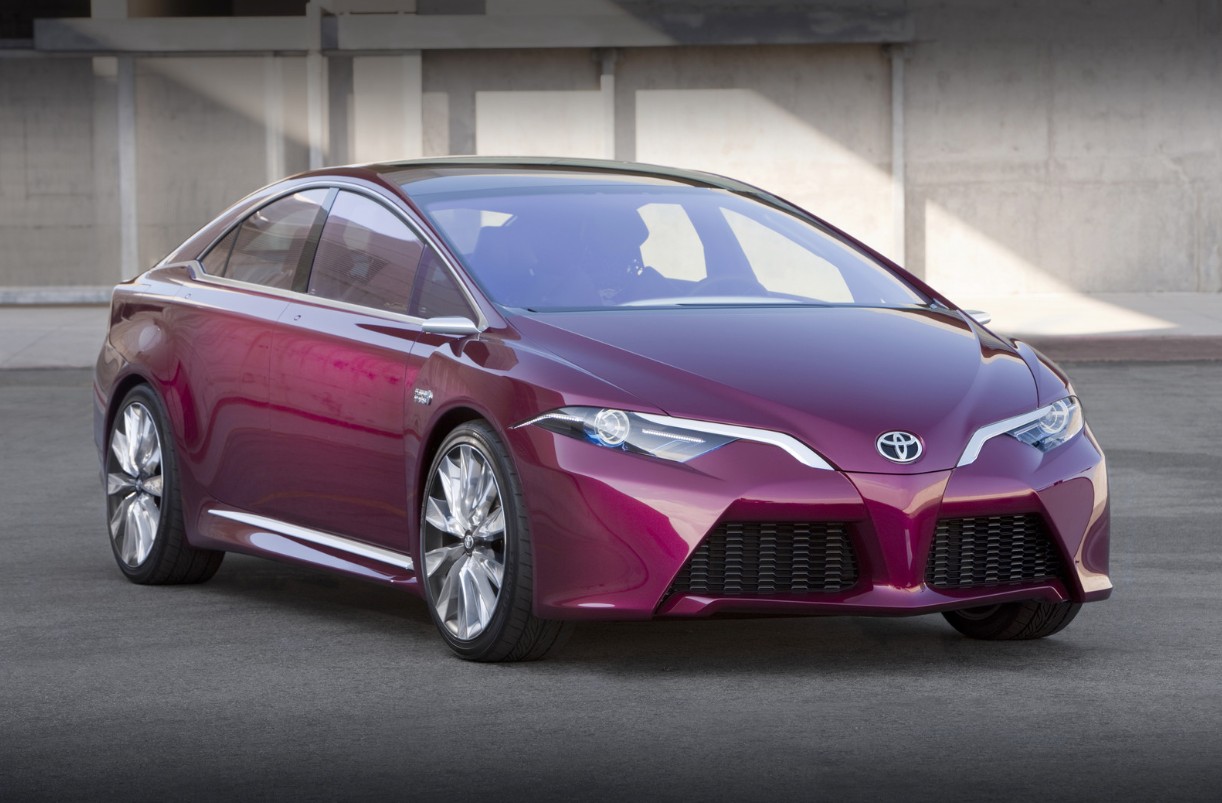
2028 Toyota NS4 Plug-In Hybrid Price, Specs, Dimensions – The 2028 Toyota NS4 Plug-In Hybrid is an interesting name to watch for anyone interested in Toyota’s next generation of electrified sedans. The original NS4 was unveiled in January 2012 as a four-door plug-in hybrid concept designed to explore a more advanced combination of electric driving, gasoline efficiency, futuristic styling, and intelligent vehicle technology. It was never announced as a production model, but its development philosophy remains relevant as plug-in hybrids become increasingly important to drivers who want electric commuting capability without depending entirely on charging stations. A modern interpretation could bring that original vision into a new era, combining Toyota’s hybrid experience with a more sophisticated battery system, contemporary digital technology, and improved everyday practicality.
There is currently no official confirmation from Toyota that a 2028 NS4 Plug-In Hybrid will enter production. No confirmed engine specifications, electric driving range, battery capacity, trim levels, pricing, or launch date have been published for such a vehicle. The following article explores how a hypothetical 2028 revival could develop from the original concept, using its historical design and engineering direction as a reference while treating future specifications as possibilities rather than confirmed facts. 2028 Toyota NS4 Plug-In Hybrid Price
2028 Toyota NS4 Plug-In Hybrid Redesign and Update Plan
Exterior & Interior
The exterior could become one of the strongest attractions of a revived Toyota NS4. The original concept introduced a distinctive styling direction featuring a low front profile, sharply angled bodywork, a cab-forward stance, and a roofline that flowed smoothly toward the rear. Rather than following the conservative proportions traditionally associated with family sedans, the NS4 was designed to look futuristic and aerodynamic. A modern version could reinterpret those characteristics through a wider front stance, slimmer LED lighting, a more sculpted bonnet, and a cleaner front bumper. The result could be a sophisticated plug-in hybrid sedan with a recognisable Toyota identity and a design that communicates its electrified engineering.
At the front, a hypothetical 2028 NS4 could feature narrow LED headlights connected visually by a slim lighting element, creating a wide and modern appearance. The original concept used a distinctive trapezoidal lower grille, a floating lower spoiler, and wing-like daytime running lights that extended toward the sculpted front fenders. Toyota could modernise these details with a smoother front fascia, carefully integrated air intakes, and active aerodynamic elements. Since a plug-in hybrid still requires cooling for its gasoline engine, electric motors, battery, and power electronics, the front design would need to manage airflow intelligently. A more enclosed grille could improve aerodynamic efficiency when cooling demand is low, while functional openings would provide airflow when necessary.
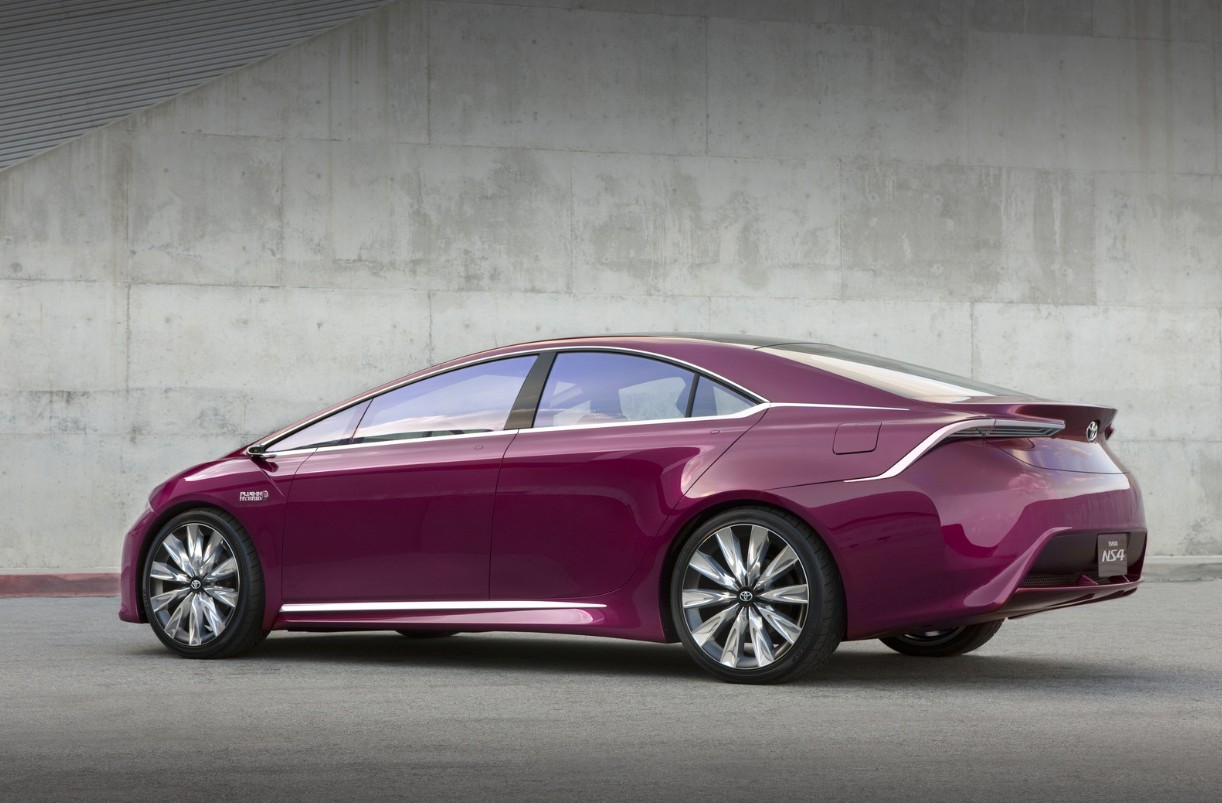
The side profile could combine a long wheelbase, short-looking front and rear overhangs, and a gently sloping roofline. The original NS4 concept featured powered swan-wing doors and elegant 19-inch alloy wheels fitted with low-rolling-resistance tyres. Those dramatic doors were suitable for an exhibition vehicle but would probably be replaced by conventional doors in a production model because of cost, manufacturing complexity, and everyday practicality. A 2028 version could retain the visual impact through sculpted door panels, flush-style handles, carefully shaped wheel arches, and aerodynamic alloy wheels. At the rear, slim LED taillights, a clean boot design, and a subtle integrated spoiler could create a distinctive appearance while supporting airflow management.
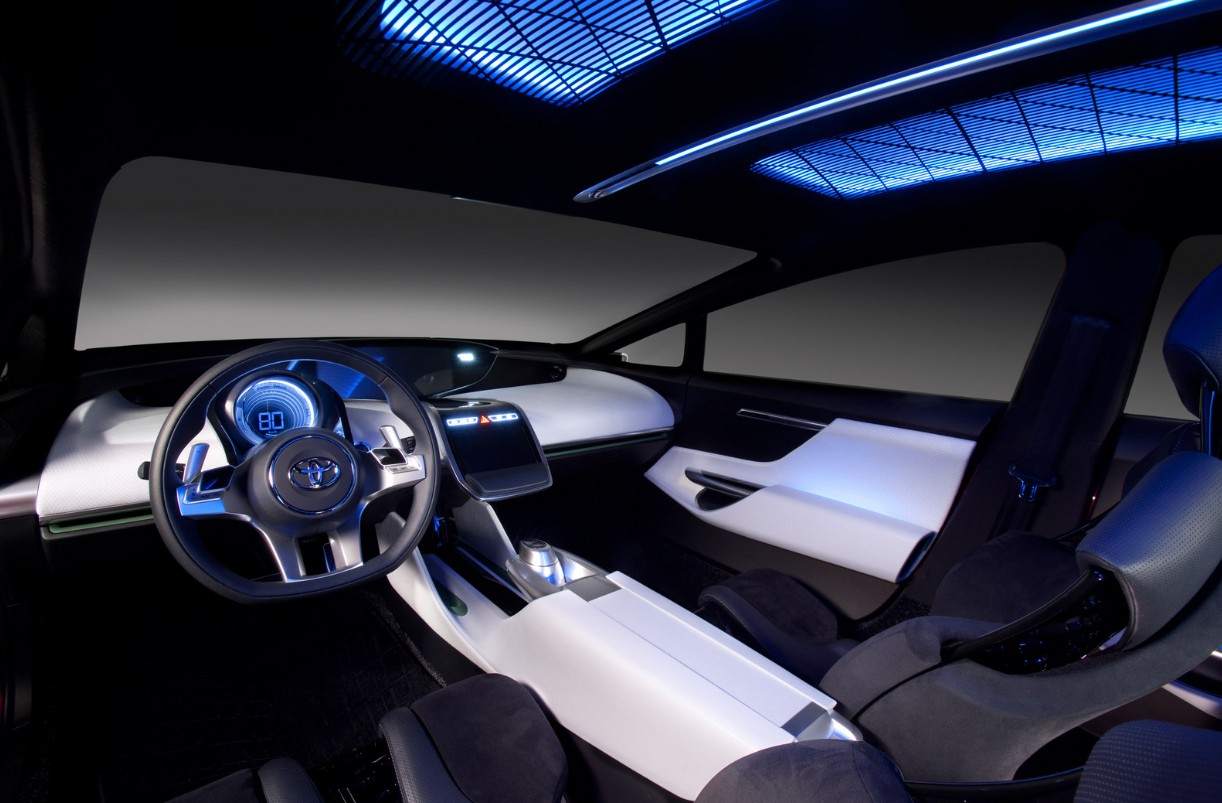
Inside, the 2028 Toyota NS4 Plug-In Hybrid could offer a more premium and technology-focused environment than the original concept. The 2012 cabin was designed around sweeping surfaces, individual seating forms, environmentally conscious materials, and a multi-touchscreen human-machine interface. A new model could translate those ideas into a spacious four- or five-seat layout, depending on its intended market positioning. Soft-touch dashboard materials, durable upholstery, adjustable front seats, and carefully arranged storage compartments would make the cabin more suitable for daily use. A panoramic glass roof could also be considered, although Toyota would need to manage heat entering the cabin, particularly in markets with high temperatures and strong sunlight.
Technology could be integrated throughout the interior rather than concentrated in one central screen. A digital instrument panel could display battery charge, remaining electric range, energy consumption, power flow, and navigation instructions. The central infotainment system could provide wireless Apple CarPlay and Android Auto compatibility, connected navigation, voice commands, and access to vehicle settings. Rear passengers might benefit from additional charging ports, improved seat cushioning, and dedicated climate-control vents. Toyota could also use ambient lighting and improved sound insulation to make electric driving quieter and more relaxing. These features would be logical developments for a modern premium-oriented plug-in hybrid, although no official 2028 NS4 interior equipment has been announced.
The original Toyota NS4 was introduced at the 2012 North American International Auto Show in Detroit before making its European debut at the Geneva Motor Show. Toyota presented it as a next-generation plug-in hybrid concept that could move beyond the familiar Prius design and appeal to drivers who wanted environmental efficiency with a more expressive appearance. The concept was intended to demonstrate how a dedicated plug-in hybrid could combine electric driving, gasoline-powered flexibility, advanced connectivity, and sophisticated safety technology in a stylish four-door vehicle. A 2028 revival would have an opportunity to revisit that ambition with more mature electrification technology and a design suited to modern sedan buyers.
A modern redesign would probably retain the original NS4’s low-slung proportions while replacing its experimental concept-car details with production-ready engineering. The original vehicle measured approximately 4,650 millimetres in length, 1,770 millimetres in width, and 1,370 millimetres in height, with a 2,700-millimetre wheelbase. Those dimensions gave it a sleek, elongated profile and a relatively low roofline. A new version could be slightly larger to provide improved rear passenger comfort, additional battery packaging space, and a more practical luggage compartment. Toyota would also need to consider modern crash structures, pedestrian protection, and the additional weight associated with a larger battery pack.
The most important update would likely involve the plug-in hybrid system. When the original NS4 appeared, Toyota was exploring ways to reduce the size and weight of hybrid components while improving electric driving capability, acceleration, and overall fuel economy. Those priorities would be even more relevant for a 2028 model. A contemporary NS4 could use a higher-capacity lithium-ion battery, more efficient electric motors, improved power electronics, and an updated gasoline engine. Intelligent energy management could automatically select the most appropriate operating mode according to battery charge, driving conditions, and route requirements. The objective would be to deliver useful electric-only commuting capability without sacrificing the long-distance flexibility of a conventional hybrid.
The cabin and digital experience would also require a complete transformation. The original NS4 introduced an innovative multi-touchscreen interface designed to resemble a smartphone, allowing occupants to manage navigation, audio, air conditioning, and vehicle information through a central control system. A 2028 interpretation could replace that early interface with a larger high-resolution display, a digital instrument cluster, wireless smartphone integration, connected navigation, and over-the-air software updates. Toyota could also introduce more advanced voice controls and personalised driver settings. However, a production vehicle would need to balance digital convenience with simple physical controls for essential functions, ensuring that technology improves everyday driving rather than making routine adjustments unnecessarily complicated. 2028 Toyota NS4 Plug-In Hybrid Price
2028 Toyota NS4 Plug-In Hybrid Specs
Engine & Performance
The powertrain would define the character of a modern NS4. The original concept was designed around a next-generation Toyota Hybrid Synergy Drive plug-in system, with Toyota highlighting its ambition to reduce component size and weight while improving fuel economy, acceleration, electric range, and charging time. The company did not publish a complete production-style engine and motor specification for the concept, so there is no reliable historical horsepower figure that can be carried over to a hypothetical 2028 model. A modern NS4 would need a substantially updated system capable of delivering smooth electric acceleration, efficient gasoline operation, and seamless transitions between its different driving modes.
A possible configuration could combine a compact turbocharged or naturally aspirated gasoline engine with one or more electric motors and a rechargeable lithium-ion battery. Toyota’s existing experience with hybrid and plug-in hybrid vehicles would provide a foundation for developing such a system, although the exact engine size and layout would depend on the vehicle’s performance and efficiency targets. An electric motor could provide immediate torque when pulling away from a standstill, while the gasoline engine could support acceleration and longer journeys. The system could also operate in a combined mode when the driver needs stronger performance. These are potential engineering directions, not confirmed specifications for a production NS4.
Acceleration would ideally feel smooth and predictable rather than aggressively sporty. Electric motor assistance could help the sedan respond quickly in city traffic, making overtaking and merging easier without requiring the gasoline engine to operate continuously. A carefully calibrated hybrid transmission or power-split system could keep the engine operating within an efficient range during normal driving. Toyota could also provide selectable driving modes, allowing the driver to prioritise electric operation, balanced hybrid efficiency, or stronger acceleration. Regenerative braking would recover some energy during deceleration and return it to the battery, helping improve efficiency in stop-and-go traffic. The final driving character would depend on motor output, battery capacity, vehicle weight, and software calibration.
2028 Toyota NS4 Plug-In Hybrid Fuel Economy
Fuel economy and electric driving range would be major selling points if Toyota revived the NS4 as a plug-in hybrid. A larger battery could allow drivers to complete many short daily journeys using electricity alone, provided they charge regularly and their travel distance remains within the vehicle’s available electric range. When the battery charge becomes insufficient for electric-only operation, the gasoline engine and hybrid system could continue the journey without requiring an immediate charging stop. This flexibility is one of the main advantages of a plug-in hybrid compared with a battery-electric vehicle. However, no official electric range, battery capacity, fuel-consumption rating, or emissions figure exists for a 2028 NS4, so numerical claims would be premature.
Real-world efficiency would depend on more than the size of the battery or the engine’s advertised output. Drivers who regularly charge at home or at work could use electric power for a larger proportion of their daily journeys, reducing gasoline consumption. Drivers who rarely recharge would carry the additional battery weight without gaining the full benefit of plug-in operation. Weather, air-conditioning use, road gradients, traffic congestion, driving speed, tyre selection, and passenger load would also influence consumption. A modern NS4 would therefore need intelligent energy management and clear driver information to help owners understand when to charge and how to use the available electric range efficiently. Toyota has not announced any official 2028 NS4 fuel-economy targets.
2028 Toyota NS4 Plug-In Hybrid Safety Features
Safety would need to be a major part of the 2028 NS4 development programme. The original concept was notable for exploring advanced safety technologies at a time when many of them were not yet widely available in mainstream vehicles. Toyota highlighted a next-generation pre-collision system, adaptive driving beam headlights, blind-spot monitoring, and camera-based rear visibility. Its pre-collision technology used millimetre-wave radar and stereo cameras to detect potential hazards involving vehicles, pedestrians, and lane departures. A modern production interpretation could build on those early ideas with more sophisticated sensors, improved processing capability, and a broader range of driver-assistance functions.
A future NS4 could potentially include automatic emergency braking with pedestrian and cyclist detection, lane-departure alerts, lane-keeping assistance, adaptive cruise control, and road-sign recognition. Blind-spot monitoring and rear cross-traffic alerts would be useful when changing lanes or reversing out of crowded parking spaces. A surround-view camera system could provide a clearer picture of the vehicle’s immediate surroundings, while front and rear parking sensors could make manoeuvring easier. Toyota could also offer improved headlights with adaptive beam control to help illuminate dark roads without unnecessarily dazzling other drivers. These features would be plausible for a contemporary Toyota, but their availability on a hypothetical NS4 has not been confirmed.
Passive safety would be equally important. A production vehicle would need a carefully engineered passenger safety cell, front and side impact protection, effective seatbelts, head restraints, and an appropriate airbag system. Battery placement would also require attention to structural protection, thermal management, and electrical isolation in the event of a serious collision. The challenge would be to integrate a relatively large rechargeable battery without compromising passenger space or crash performance. Toyota would also need to validate the vehicle against the safety regulations and independent crash-test procedures applicable to each market. Until a production vehicle exists, there is no verified crash-test rating or official safety specification for the 2028 Toyota NS4 Plug-In Hybrid.
If Toyota decided to sell the NS4 as a premium-oriented electrified sedan, a straightforward trim range could help customers choose the equipment that best matches their budgets. An entry-level grade could include the essential plug-in hybrid system, a digital instrument display, smartphone connectivity, automatic climate control, and a comprehensive safety package. A mid-range version could add upgraded upholstery, larger infotainment equipment, more convenient parking assistance, and additional comfort features. A higher grade could introduce premium audio, more sophisticated lighting, a panoramic roof, enhanced seat adjustment, and distinctive exterior styling. These names and equipment combinations are hypothetical; Toyota has not published any official 2028 NS4 trim structure.
A sport-inspired grade could also be considered if Toyota wanted to give the NS4 a stronger emotional appeal. It might use unique alloy wheels, darker exterior details, sportier seat upholstery, revised steering calibration, and a more distinctive bumper design. However, a performance-oriented version would need to preserve the model’s plug-in hybrid efficiency rather than adding unnecessary weight or sacrificing electric driving capability. A luxury-focused alternative could instead prioritise quieter cabin materials, enhanced rear-seat comfort, and additional convenience technology. The final range would depend on Toyota’s intended customer base, production costs, and regional demand. No official grade names, optional packages, or standard equipment lists have been announced for a 2028 NS4. 2028 Toyota NS4 Plug-In Hybrid Price
2028 Toyota NS4 Plug-In Hybrid Release Date & Price
Pricing would play a major role in determining whether a revived Toyota NS4 could compete successfully. Plug-in hybrid vehicles generally require more complex powertrains than conventional gasoline cars because they combine a combustion engine, electric motors, battery packs, charging hardware, and additional control systems. A 2028 NS4 would therefore need to offer enough electric driving capability and equipment to justify its price while remaining competitive with other electrified sedans. Toyota could potentially position it above a conventional hybrid sedan but below larger luxury plug-in hybrid vehicles. That would create room for buyers who want more electric flexibility than a standard hybrid without moving to a fully electric vehicle.
There is currently no confirmed MSRP or expected retail price from Toyota for the 2028 NS4 Plug-In Hybrid. Any figures circulating without an official manufacturer announcement should be treated as speculation. The eventual price would depend on battery size, electric motor output, safety equipment, interior materials, production location, and the markets selected for sale. Regional taxes and import duties could also produce significant differences between countries. In Indonesia, for example, the final retail price of a hypothetical imported plug-in hybrid could be influenced by local tax regulations, vehicle classification, import arrangements, and any applicable incentives. A price estimate for the United States or Europe should not be presented as an Indonesian showroom price.
The release date remains equally uncertain. Toyota unveiled the original NS4 concept in January 2012 and later presented it to European audiences at the Geneva Motor Show in March of that year. The concept was intended to demonstrate technology that Toyota hoped to develop toward the middle of that decade, but the company did not announce a direct production version carrying the NS4 name. There is no official 2028 reveal date, production schedule, dealership arrival, or reservation programme. If Toyota were to approve a revival, the company would first need to introduce the project publicly and provide technical information before a credible launch timetable could be established.
Global market availability would depend on Toyota’s assessment of plug-in hybrid demand and the commercial potential of a dedicated electrified sedan. Markets with established home-charging infrastructure and strong interest in lower-emission vehicles could be natural candidates. Europe, Japan, North America, and selected Asian markets could all be considered in a hypothetical global product strategy, but none has been confirmed for a 2028 NS4. In Southeast Asia, customer interest would depend heavily on purchase price, charging access, after-sales support, and local incentives. Indonesian buyers should not assume that the vehicle will be offered by Toyota Astra Motor simply because the company sells other electrified Toyota models. Official regional confirmation would be necessary before treating the NS4 as a future local-market product.
Conclusion
The 2028 Toyota NS4 Plug-In Hybrid represents an interesting opportunity to revisit one of Toyota’s earlier visions for a stylish, technology-focused plug-in hybrid sedan. The original concept combined a distinctive aerodynamic design with electric driving ambitions, intelligent cabin technology, and advanced safety ideas. A modern revival could take those foundations further through a more capable battery system, improved electric range, refined hybrid performance, connected infotainment, and contemporary driver assistance. Its success would depend on delivering meaningful electric commuting capability without making the vehicle unnecessarily expensive or complicated. For now, however, the 2028 NS4 remains a hypothetical revival rather than a confirmed Toyota production model, with its specifications, trims, pricing, and release date still unknown.
Note: This blog post’s material is primarily sourced from resources that were available previous to the product’s release. For the most up-to-date information, contact your local dealership or consult official sources.
Frequently Asked Questions
2028 Toyota NS4 Plug-In Hybrid Price, Specs, Dimensions - The 2028 Toyota NS4 Plug-In Hybrid is an interesting name to watch for anyone interested in Toyota's next generation of electrified sedans. The original NS4 was unveiled in January 2012 as a four-door plug-in hybrid concept designed to explore…
There is currently no official confirmation from Toyota that a 2028 NS4 Plug-In Hybrid will enter production. No confirmed engine specifications, electric driving range, battery capacity, trim levels, pricing, or launch date have been published for such a vehicle. The following article explores how a hypothetical 2028 revival…
2028 Toyota NS4 Plug-In Hybrid Redesign and Update Plan Exterior & Interior The exterior could become one of the strongest attractions of a revived Toyota NS4. The original concept introduced a distinctive styling direction featuring a low front profile, sharply angled bodywork, a cab-forward stance, and a roofline…
At the front, a hypothetical 2028 NS4 could feature narrow LED headlights connected visually by a slim lighting element, creating a wide and modern appearance. The original concept used a distinctive trapezoidal lower grille, a floating lower spoiler, and wing-like daytime running lights that extended toward the sculpted…
The side profile could combine a long wheelbase, short-looking front and rear overhangs, and a gently sloping roofline. The original NS4 concept featured powered swan-wing doors and elegant 19-inch alloy wheels fitted with low-rolling-resistance tyres. Those dramatic doors were suitable for an exhibition vehicle but would probably be…